What To Avoid In Marrakech At Night? Staying Safe On A Free Night Walking Tour
The things that catch visitors out in Marrakech after dark, from Jemaa el-Fnaa tip requests to fake-guide approaches, and the free night walking tours that cover the medina safely.
In Short
Marrakech at night is walkable and the core sightseeing is free: Jemaa el-Fnaa, the souk lanes, the Koutoubia exterior and gardens, and the ramparts all cost nothing to see. The traps are specific. Performers, snake charmers and food stalls at Jemaa el-Fnaa work for tips and sales, so photographs with them come with a request for money. Fake-guide approaches and the "it is closed today, I will guide you" line are known scams. Paid monuments cost real money: Bahia Palace, El Badi Palace, the Saadian Tombs and the Almoravid Koubba are each 100 MAD for foreign adults, and Jem Majorelle is never free.
This question sits inside the Marrakech At Night guide.
Quick Facts
| Thing at night | Free or paid | What to watch for |
|---|---|---|
| Jemaa el-Fnaa square | Free, open around the clock | Performers, musicians and food stalls work for tips and sales; photos with snake charmers or monkey handlers are asked for money |
| The souks of the Medina | Free to walk | Prices are not fixed and the pressure to buy is the cost, not the entry |
| Koutoubia exterior, minaret esplanade and gardens | Free to walk and view | The prayer hall is closed to non-Muslim visitors and no ticket exists for it |
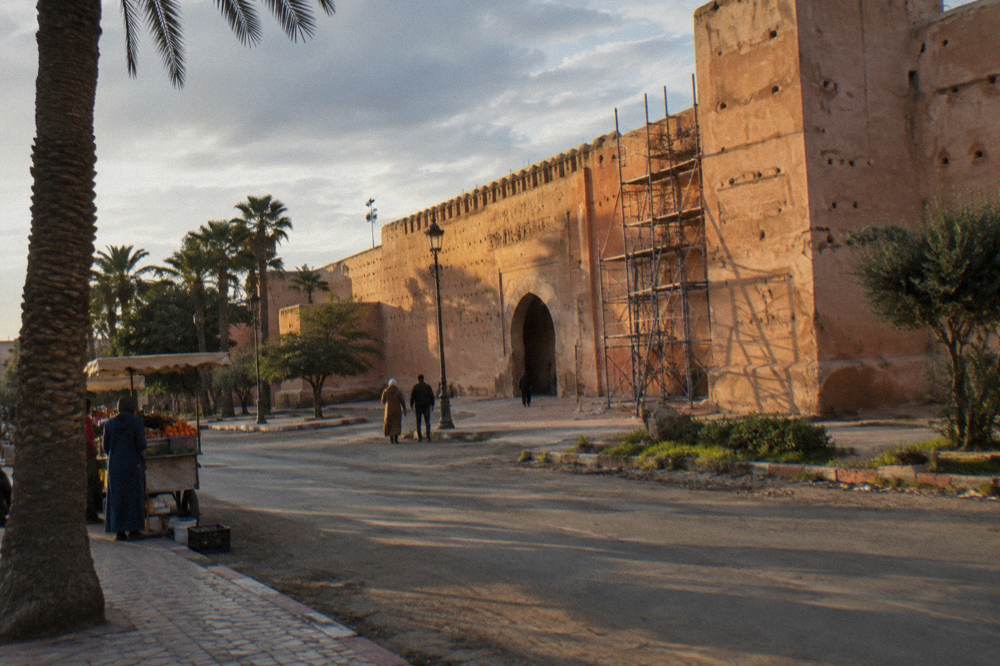
| Bab Agnaou and the ramparts | Free from the street | Some stretches carry scaffolding from restoration works |
| Bahia, El Badi, Saadian Tombs, Almoravid Koubba | 100 MAD foreign adult each | Free Fridays apply to Moroccan nationals only |
| Tanneries at Bab Debbagh | No tariff, but not free in practice | Viewing is from a leather shop terrace where a tip or purchase is expected |
What To Avoid In Marrakech At Night?
The things to avoid in Marrakech at night are tip-driven performers and food stalls at Jemaa el-Fnaa, pressure selling in the souks, fake-guide and "it is closed today" approaches, lookalike ticket websites, and mistaking paid monuments for free ones. The streets themselves are free to walk: the square, the souk lanes, the Koutoubia exterior and the ramparts cost nothing. What costs you money is engagement, not entry.
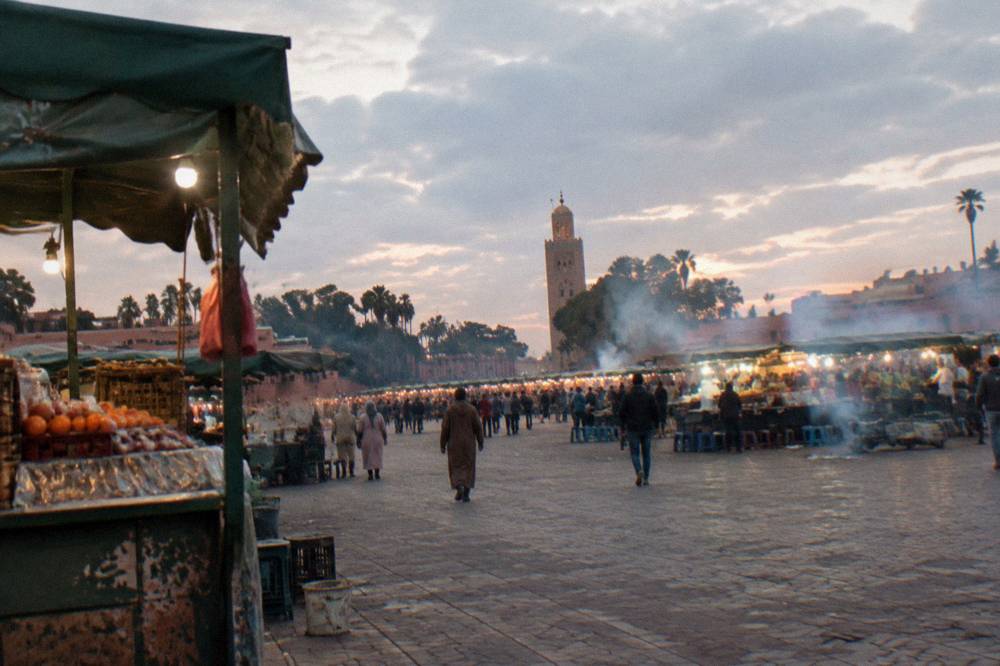
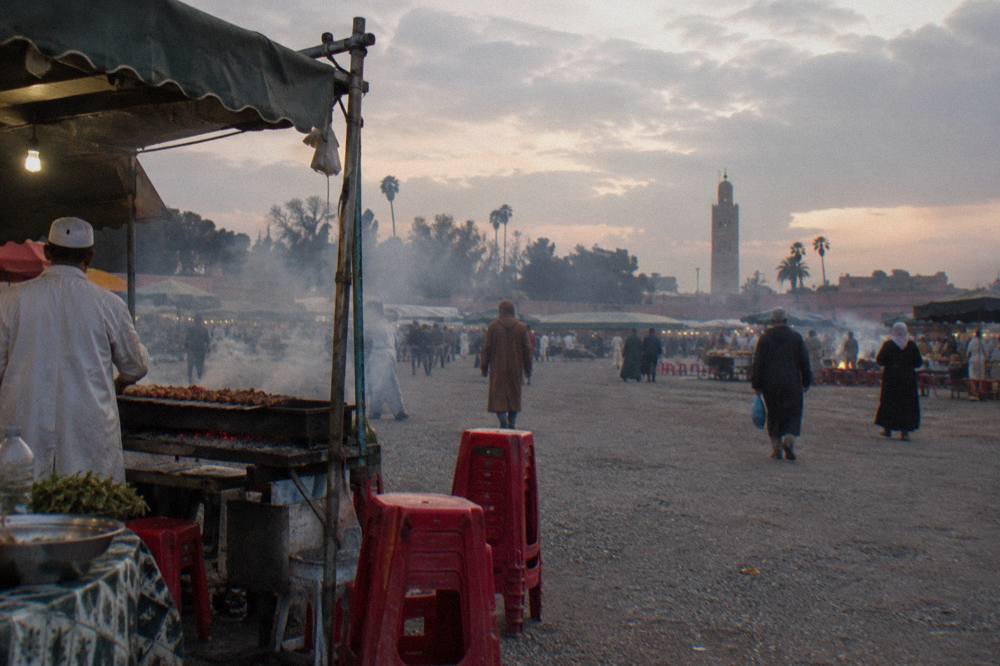
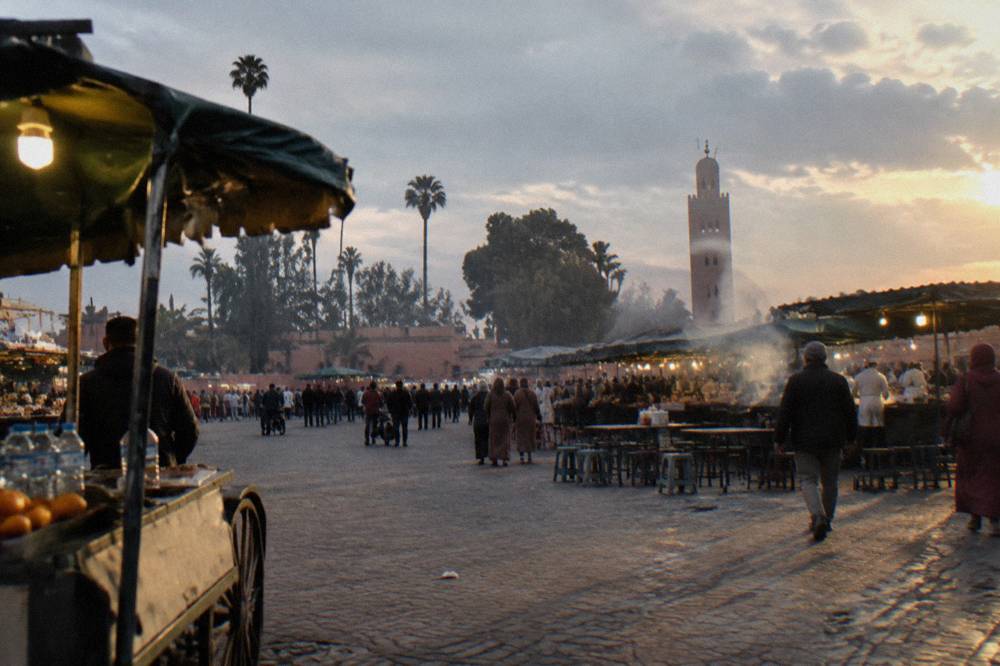
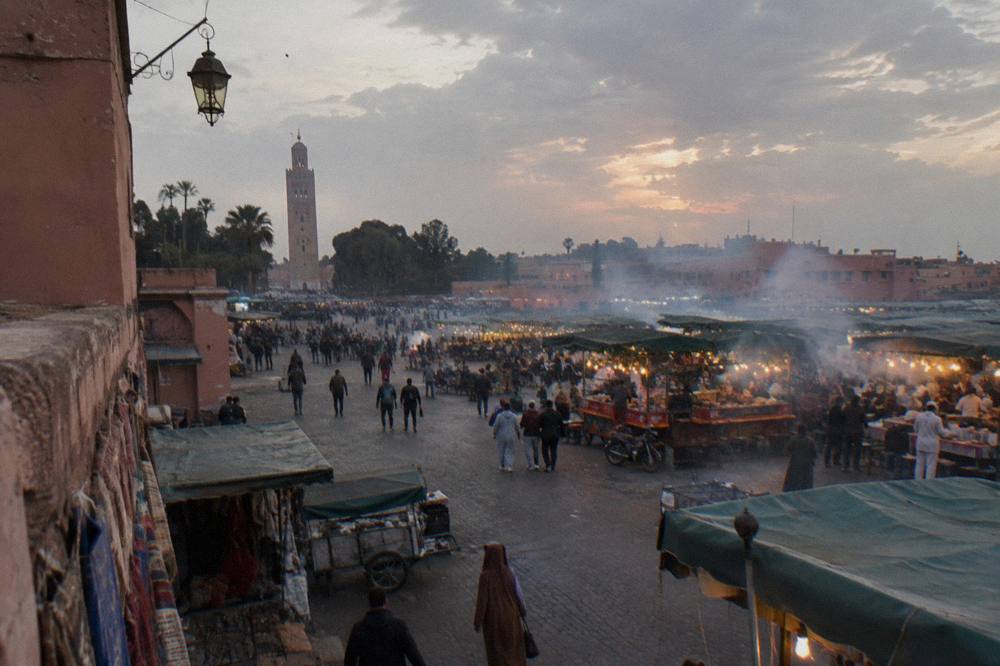
The first thing to understand is that Marrakech's headline night space, Jemaa el-Fnaa, is a public square with no ticket, open around the clock. It is genuinely free to stand in, walk through and watch. What is not free is participating: the square's performers, musicians and food stalls work for tips and sales. Photographs with performers, snake charmers or monkey handlers come with an ask for money, and that ask is the business model, not an exception. Decide before you raise a camera whether you are willing to pay for the picture.
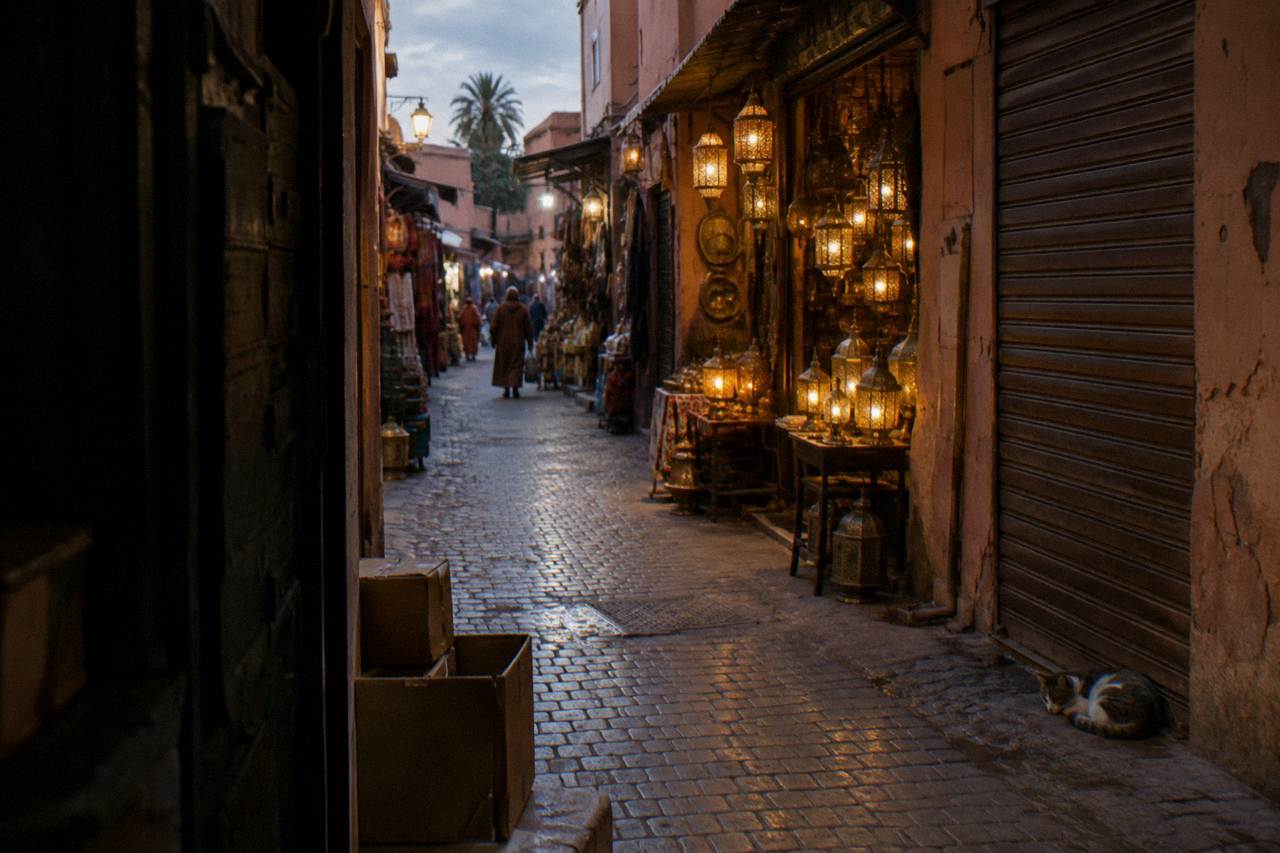
The souks are the same bargain in a different form. Walking the lanes is free, and there is no gate, ticket or closing barrier to the shopping streets. The cost is commercial pressure: souk prices are not fixed, and the energetic pursuit of a sale is what many visitors find hardest about the medina at night. The honest framing is that you are walking through a working marketplace, not a museum. A polite refusal costs nothing, and walking on is normal behaviour, not rudeness.
The third trap is people, not prices. Fake guides operate in the medina, and the approaches follow known patterns: an offer to show you somewhere, a sudden friendship, or the classic line delivered near the tanneries at Bab Debbagh that the site is closed today but a guide can take you instead. There is no tannery tariff at all: the pits are normally viewed from a leather shop terrace where staff expect a tip or a purchase, so the whole encounter is commercial from the first sentence. This site's guide to Marrakech scams and fake guides covers the patterns in detail.
Then there is the ticketing trap, which is mostly a daytime problem that bleeds into evening planning. Lookalike reseller domains such as bahiapalace.com, saadiantombs.com and jemaa-elfnaa.com look official and sell marked-up access. The Ministry of Culture runs its own e-services ticket platform at e-services.minculture.gov.ma, one ticket per monument, with no unified pass. If you plan to enter Bahia Palace, El Badi Palace, the Saadian Tombs or the Almoravid Koubba, each is 100 MAD for a foreign adult and 50 MAD for a foreign child aged 7 to 13.
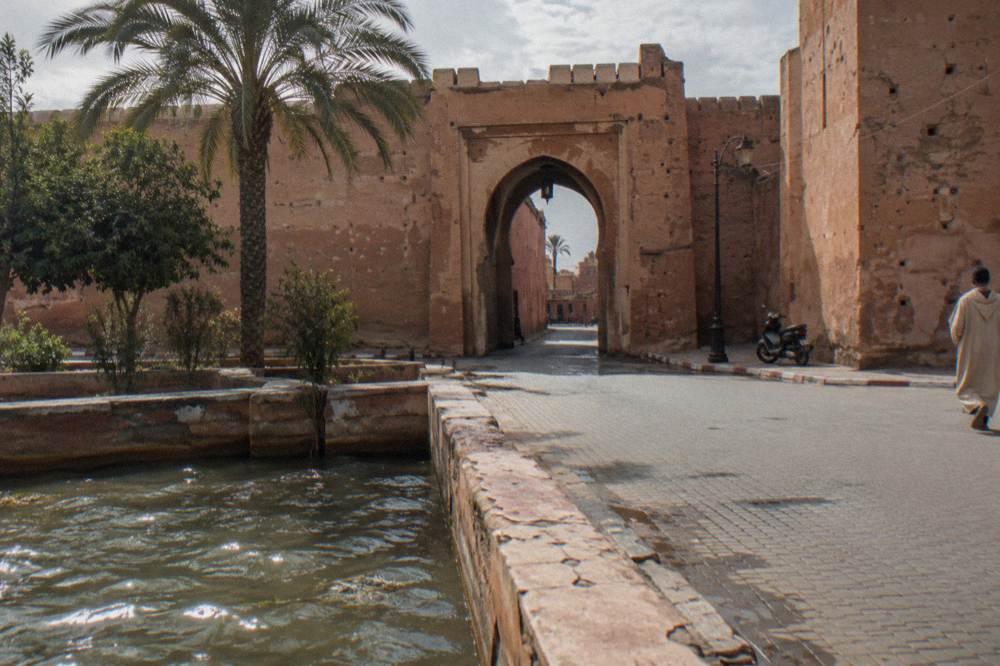
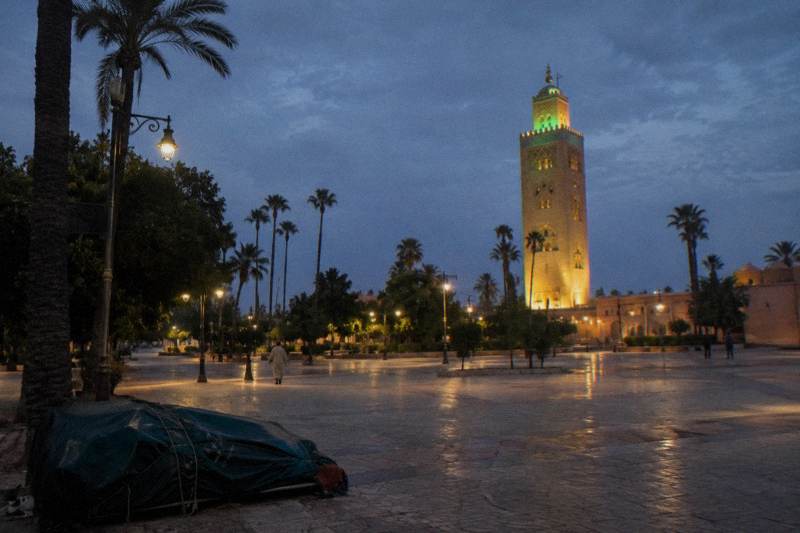
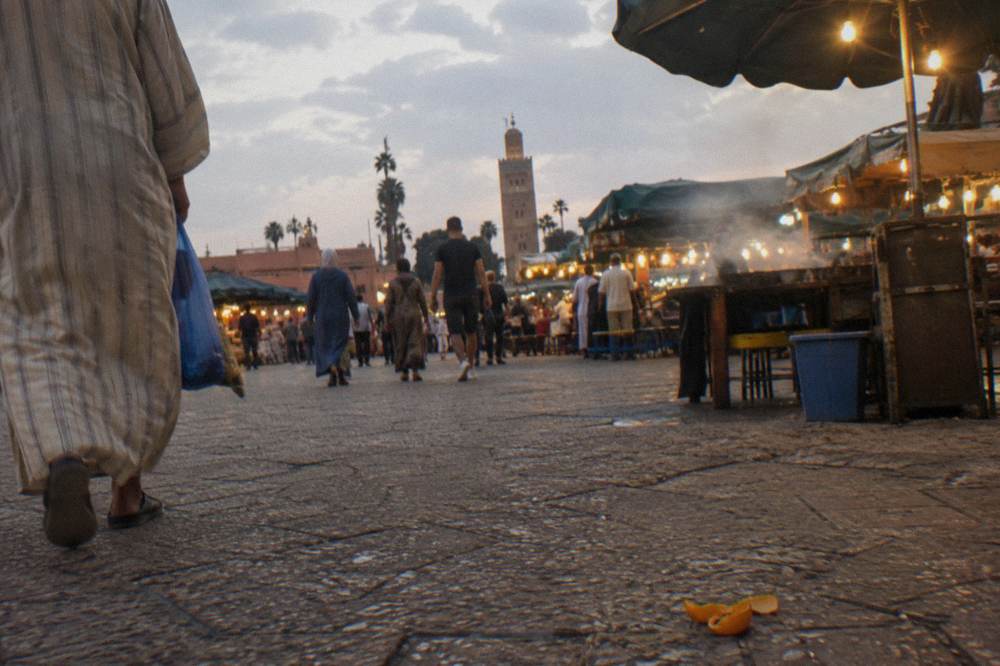
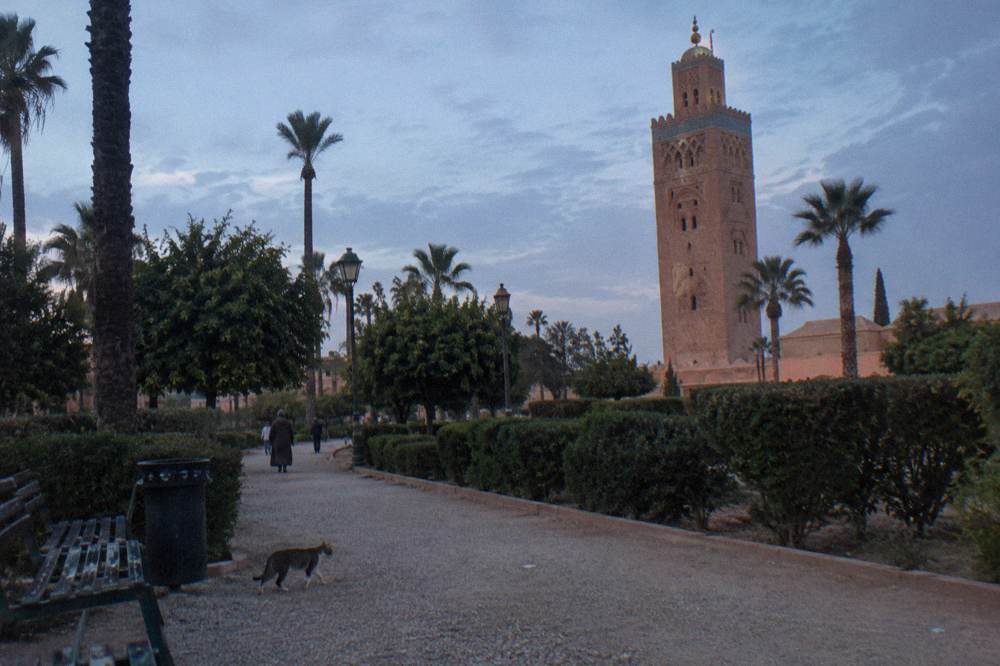
One more boundary matters at night because the Koutoubia is beautifully lit and draws people towards it. The minaret, the esplanade and the Koutoubia Gardens are free to walk and view from outside, open to everyone. The prayer hall is not: it is closed to non-Muslim visitors, and no ticket exists that lets a visitor inside. Anyone selling interior access to the mosque is selling something that does not exist. If you want to go deeper on this, the Koutoubia exterior and gardens guide lays out exactly what is free around the mosque.
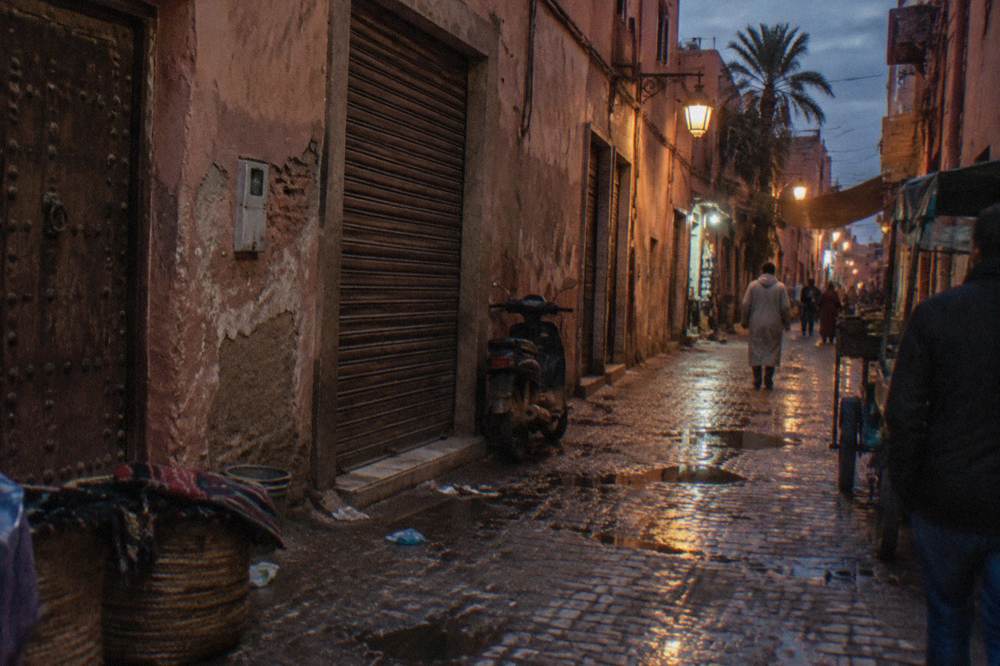
Walking with a guide solves part of this neatly, because a reserved free walk means you are not negotiating with anyone in the street. This site lists 13 free walking tours, all free and pay what you want, all reserved in advance on their platforms. The walks below are the evening-relevant options around the square and the souks.
What Is The Short Answer?
Walk the free public spaces, decline unsolicited guiding, never buy monument tickets from a lookalike website, and know which sights charge. At night the free set is Jemaa el-Fnaa, the souks, the Koutoubia exterior and gardens, the Mellah streets, Bab Agnaou and the ramparts. The paid set is the palaces, tombs and museums, each with its own dirham price. Nothing on this page requires cash to enjoy.
The clearest way to hold all of this in your head is a two-column split. On the free side: Jemaa el-Fnaa, open around the clock with no ticket; the souk lanes, free to walk with prices that are not fixed; the Koutoubia's minaret, esplanade and gardens; Bab Agnaou and the city ramparts, free to see from the street at any hour, though some stretches may have scaffolding; the Mellah's streets and market lanes; the Menara Gardens grounds with their olive grove and basin; and the Palmeraie's public roads. On the paid side: four Ministry of Culture monuments at 100 MAD each for foreign adults, Ben Youssef Madrasa at 50 MAD, Le Jardin Secret at 100 MAD with its tower another 40 MAD, Jardin Majorelle at 170 MAD, and a set of museums each with its own price.
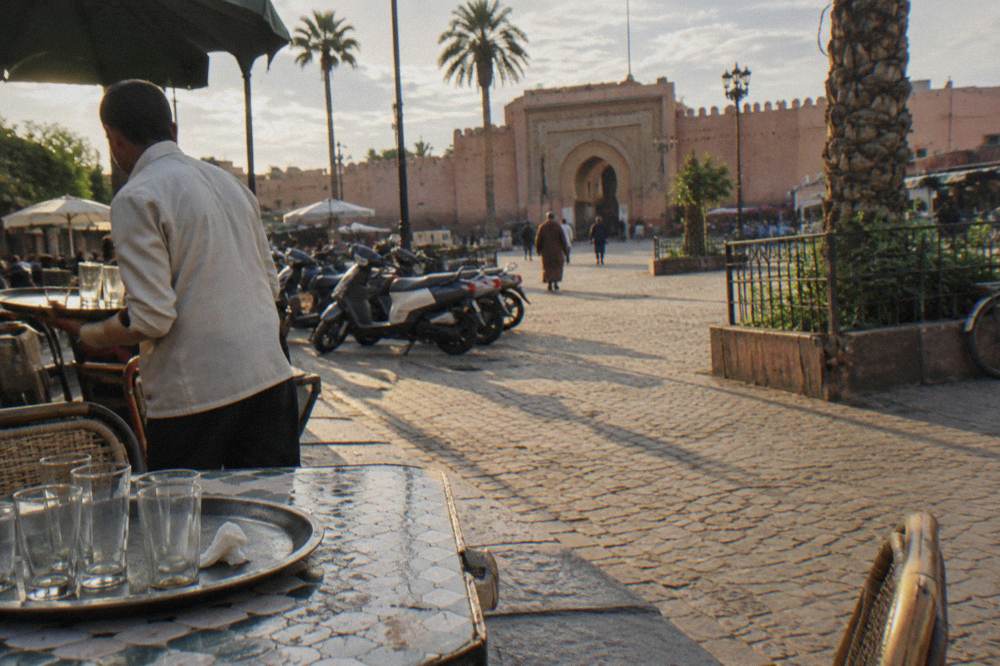
The one conditional entry is the tanneries, and the condition is the whole story. There is no tariff, no gate and no official viewing arrangement. The usual way to see the pits is from a leather shop terrace, where staff expect a tip or a purchase, and the "it is closed today, I will guide you" line delivered on the approach is the known scam. Never write the tanneries off as simply free, and treat any stranger who initiates the conversation as running the play.
| Night-relevant sight | Status | Price in MAD |
|---|---|---|
| Jemaa el-Fnaa | Free | 0 |
| Souks of the Medina | Free to walk | 0, prices inside are not fixed |
| Koutoubia exterior, esplanade, gardens | Free | 0, prayer hall closed to non-Muslims |
| Bab Agnaou and ramparts | Free from the street | 0, possible scaffolding |
| Mellah streets | Free | 0, synagogue and cemetery fees not published |
| Tanneries, Bab Debbagh | Conditional | No tariff, terrace viewing expects a tip or purchase |
| Bahia Palace | Paid | 100 foreign adult, 50 foreign child 7 to 13 |
| El Badi Palace | Paid | 100 foreign adult, 50 foreign child 7 to 13 |
| Saadian Tombs | Paid | 100 foreign adult, 50 foreign child 7 to 13 |
| Jardin Majorelle | Paid, never free | 170 public price |
A note on the free-entry rule people hear about and half-remember. Bahia Palace, El Badi Palace, the Saadian Tombs and the other Ministry of Culture sites let Moroccan nationals in free on Fridays and on the first day of national and religious holidays. That rule does not apply to foreign visitors, and the 30 MAD rate the same platforms show needs a Moroccan or resident document. If someone tells you the palace is free tonight, it is not free for you.
What Should You Know Before You Go?
Before a night walk in Marrakech, know your meeting point exactly, know that every walk on this site is free and pay what you want and reserved on its platform, and keep the free-versus-paid split straight. Jemaa el-Fnaa's performers ask for money by design. Souk prices are not fixed. Restoration works can leave scaffolding at ticketed monuments. This site prints no tip figure; some guides suggest a contribution on their GuruWalk page, and the amount stays yours.
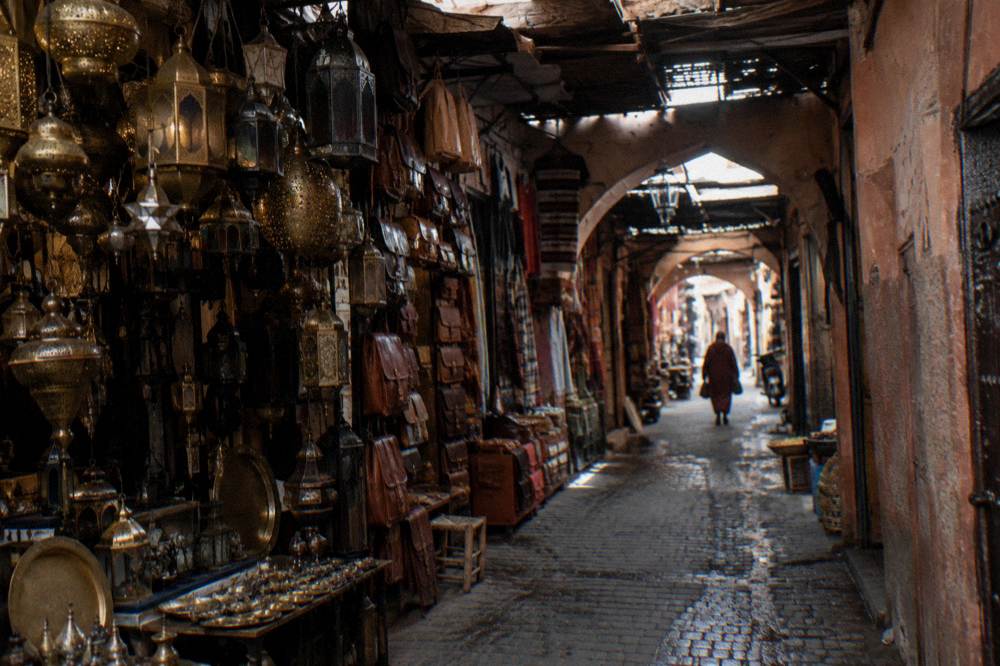
Meeting points matter because the medina is a maze of similar lanes and several walks start within a few minutes of each other. Learn the exact meeting point of the walk you reserved: "White dome, Koutoubia square" is not "Jemaa el-Fnaa main square", and Cafe Argana is not Cafe de France. Arrive knowing which one is yours, because unattached men near the square sometimes present themselves as guides, and the clean defence is that you already have a guide and a meeting point. The free-walk model itself is simple: every walk is free, pay what you want, reserved on GuruWalk or freetour.com; this site prints no tip figure, and the amount is the visitor's decision. The reader decides. The rest of the planning pages sit on Free Things To Do In Marrakech.
Money handling deserves one honest paragraph, and this site keeps it free of invented norms. Nothing is published about how much anyone tips on a walk, and no verdict on an amount is possible. What can be said in plain facts: a foreign adult ticket at Bahia Palace costs 100 MAD, Ben Youssef Madrasa costs 50 MAD, and Jardin Majorelle costs 170 MAD. Those are monument prices, not tip guidance. If you are weighing cash versus card generally, the blog post on cash or card in Morocco covers that question on its own terms.
The earthquake history matters less at night than people fear, but scaffolding is real. Bahia Palace, El Badi Palace and the Saadian Tombs reopened in October 2023 after securing works, and restoration continues, so sections of the ramparts and stretches at ticketed monuments may carry scaffolding. Nobody should promise you a fully restored monument, and any guide or seller who does is overselling. The palaces and tombs also close at night, which makes them evening skyline rather than evening destinations: El Badi's walls and the Koutoubia minaret are what you actually see after dark, both free.
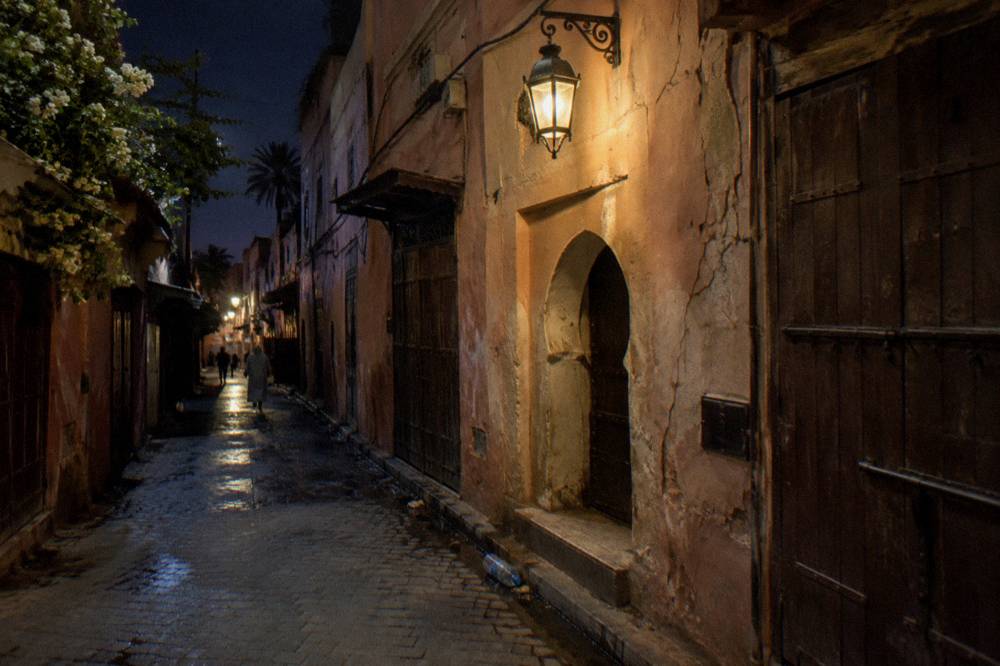
Dress and safety questions come up constantly and this site has answered them properly elsewhere: the medina safety guide and the what to wear guide carry the detail. The short version tied to this page: walking the free public spaces at night is the same activity as walking them by day, the same tip-performing square, the same unfixed souk prices, the same closed prayer hall at the Koutoubia. Darkness changes the atmosphere, not the price list.
Which Free Walking Tours Cover This?
Two night tours cover this: Secrets of the Medina: Discover Marrakech by Night, a 2-hour GuruWalk with Abdellah rated 4.88 out of 5 across 91 reviews and meeting at the white dome on Koutoubia square, and The Best of Marrakesh Stories by Night, a 2 hour 30 minute GuruWalk with hmmed rated 4.27 out of 5 across 22 reviews. Around Jemaa el-Fnaa, freetour.com and GuruWalk walks meet right on the square.
Start with the dedicated night category. Secrets of the Medina: Discover Marrakech by Night is a GuruWalk page, guided by Abdellah, 2 hours long, in English, rated 4.88 out of 5 across 91 GuruWalk reviews. It meets at the white dome on Koutoubia square, which puts its start point beside the free Koutoubia Gardens and a short walk from Jemaa el-Fnaa. The Best of Marrakesh Stories by Night is also a GuruWalk page, guided by hmmed, 2 hours 30 minutes, in English, rated 4.27 out of 5 across 22 GuruWalk reviews, meeting at Hotel Ali on Rue Moulay Ismail. That walk is free to join, and its GuruWalk page flags possible extra costs such as entrance fees.
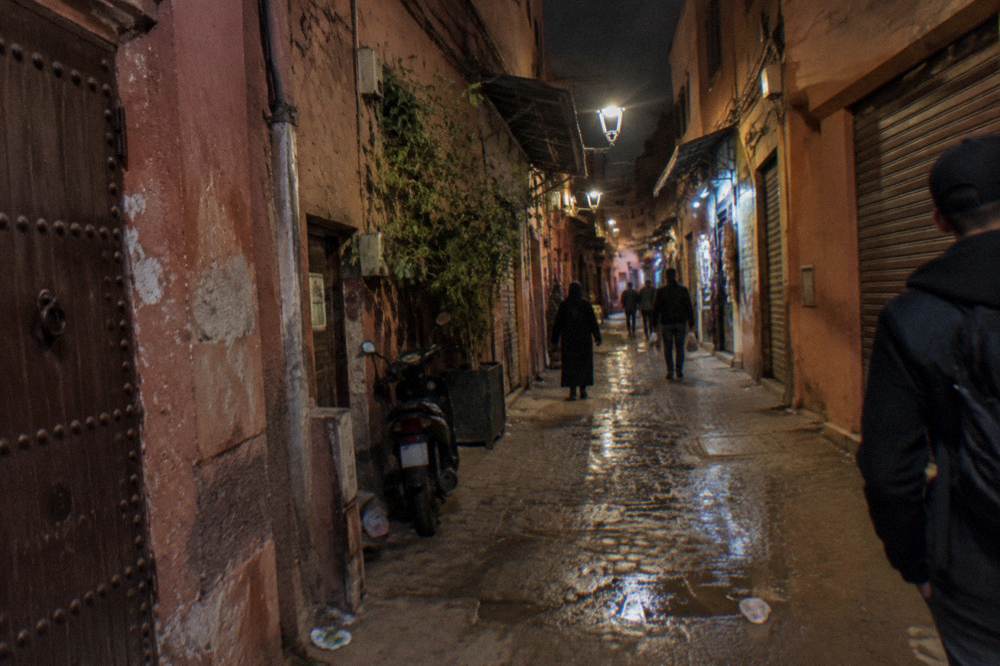
For the square and souks themselves, the strongest-reviewed English walk on this site is Free Tour Marrakech: Old City Secrets, listed on freetour.com, rated 9.6 out of 10 across 938 freetour.com reviews. It runs 2 hours 45 minutes in English and meets at Cafe Restaurant Le Samovar, a named, findable address at the Jemaa el-Fnaa end of things. Like everything here it is free, pay what you want, reserved on its platform, and this site neither operates it nor is affiliated with freetour.com. A freetour.com page with 938 reviews is also a page whose meeting-point instructions have been road-tested by hundreds of walkers, which is exactly what you want when the alternative is negotiating directions with strangers after dark.
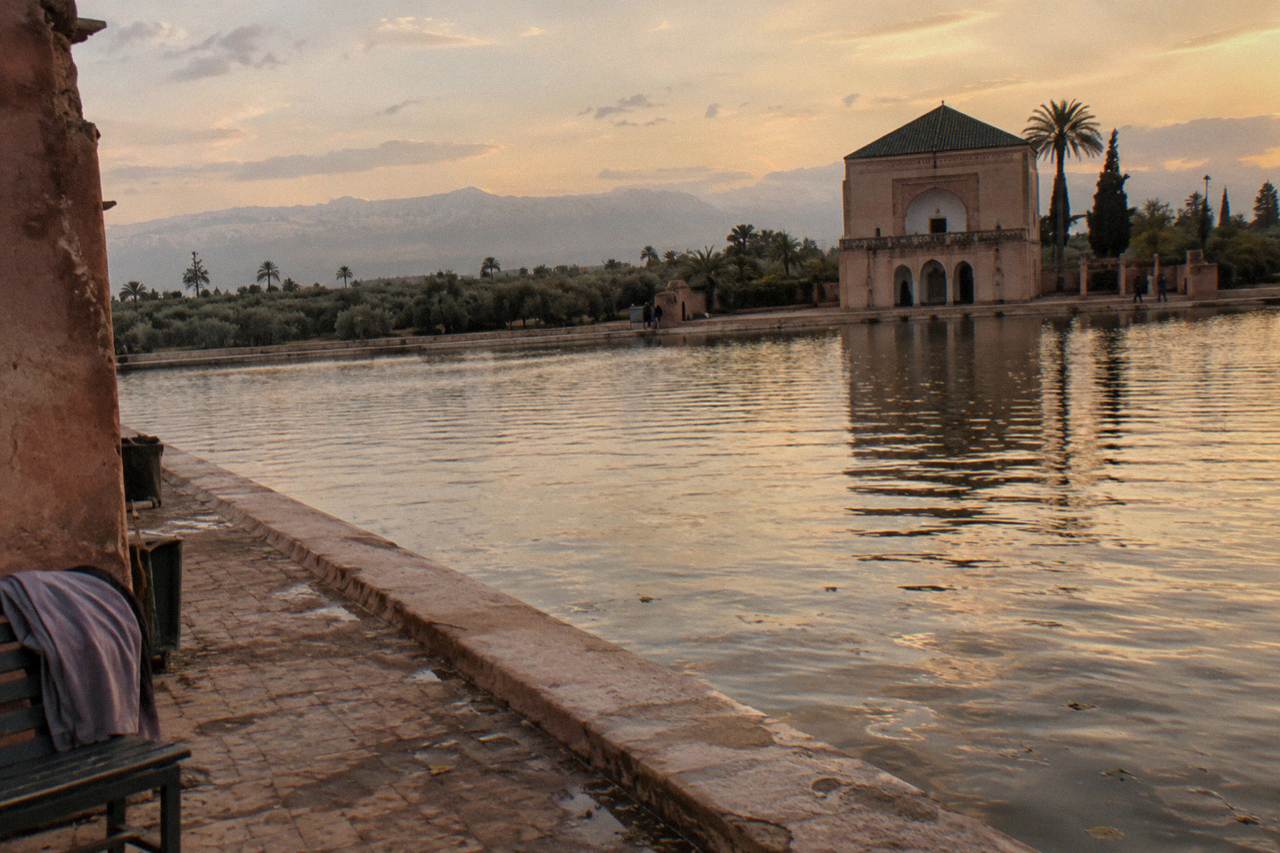
The longer square-side option is the Marrakech Imperial Tour, listed on freetour.com and run by Marrakesh Imperial Tours, rated 8.4 out of 10 across 474 freetour.com reviews. It runs 3 hours in English and Italian and meets at Hotel Restaurant Cafe de France, on Jemaa el-Fnaa itself. GuruWalk's own contribution to the square corner is the Marrakech Medina tour, meeting at Jemaa el-Fnaa main square, 2 hours 30 minutes in English, rated 4.85 out of 5 across 235 GuruWalk reviews. There is also a 1-hour express walk in English and French meeting at Jemaa el-Fnaa, though it has too few reviews for a score yet.
Every one of these walks belongs to an independent local guide, and reservations happen on GuruWalk or freetour.com. Introduce each walk by what is actually published: its platform, its guide where the walk's own page names one, its meeting point, its duration, its language and its rating with its scale. Each walk's own page describes its route as the guide or operator gives it. The order on the day can change, so any promise of specific landmarks inside the medina should come from that page, not from a stranger in the street. That distinction is the whole safety argument of this article in miniature.
If night is when you want the city but not a booking, the free set stands on its own. Walk Jemaa el-Fnaa and watch without photographing performers. Walk the Koutoubia esplanade and gardens. Walk the Mellah streets, Bab Agnaou, the ramparts, Place des Ferblantiers by Bab Doukkala. All of it is free, and none of it requires you to talk to anyone. The reserved walk simply adds a guide with a name, a meeting point and a review history, which removes most of the situations this page warns about.
Mistakes That Trip People Up At Night In Marrakech
The recurring mistakes are treating the tanneries as free, expecting Friday free entry at the palaces as a foreign visitor, buying tickets from lookalike websites, assuming garden tickets cover towers or museums, photographing square performers without expecting to pay, and following anyone who says a site is closed today. Each mistake has a clean correction, and every correction comes from the price list above.
The tanneries mistake comes first because it is the most persistent. Visitors repeat that the tanneries of Bab Debbagh are free to visit. There is no tariff, but the normal viewing arrangement is a leather shop terrace with an expectation of a tip or a purchase, and the approach line "it is closed today, I will guide you" is the known scam attached to it. The correction: treat the tanneries as commercial territory, go only if you want the shop experience, and disengage from anyone who opens with a closure claim.
The Friday mistake is next. Bahia Palace, El Badi Palace, the Saadian Tombs and the Almoravid Koubba each cost 100 MAD for a foreign adult, and the free Fridays and national-holiday free days at these Ministry of Culture sites apply to Moroccan nationals only. The 30 MAD rate needs a Moroccan or resident document. The correction: budget 100 MAD per monument per adult if you want to go inside, and buy from the Ministry of Culture's own platform, never from a lookalike domain.
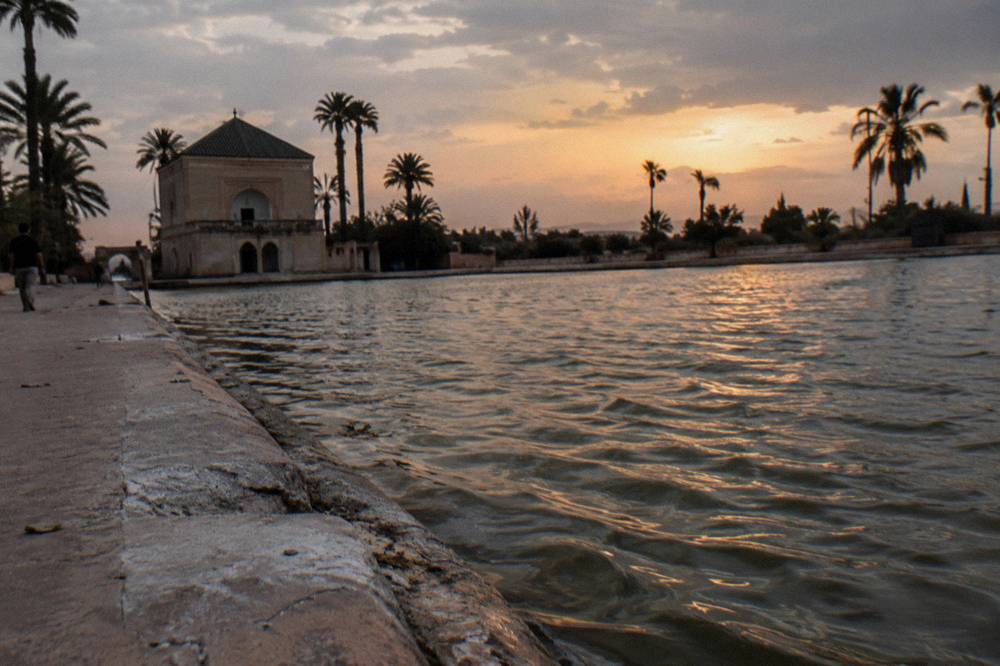
The garden-boundary mistake catches people at Menara and Majorelle. The Menara Gardens grounds, olive grove and basin are free, but the pavilion is a separate 60 MAD ticket for foreign adults. Jardin Majorelle is 170 MAD and never free, and its Berber Museum and the Yves Saint Laurent museum are separate tickets whose prices are not published here. A tower, pavilion or museum never inherits its garden's status. The same rule holds at Le Jardin Secret, where the garden is 100 MAD and the tower costs another 40 MAD.
The engagement mistakes are behavioural. Photographing performers, snake charmers or monkey handlers at Jemaa el-Fnaa invites a request for money, because that is their work. Haggling without buying in the souks is fine; feeling pressured into buying is the actual cost of the free lanes. Accepting an unsolicited guide, anywhere, recreates every paid situation this page describes. The correction for all three is the same: book a free walk, meet it at its stated point, and let the reserved guide own the evening's decisions.
For everything after dark, here are the Marrakech night walks you can reserve, each free to join, each pay what you want.
Common Questions About Staying Safe In Marrakech At Night
What To Avoid In Marrakech At Night?
Avoid engaging with unsolicited guides, photographing performers and snake charmers without expecting to pay, buying monument tickets from lookalike reseller domains, and treating the tanneries or the palaces as free. The square, the souks, the Koutoubia exterior and the ramparts are free to walk; tips, purchases and monument tickets are where money changes hands.
Is Marrakech Safe To Walk Around At Night?
The free public spaces, Jemaa el-Fnaa, the souk lanes, the Koutoubia esplanade and the ramparts, are open and walkable at night. This site's medina safety guide covers the question in full. A reserved free walk adds a named guide and a fixed meeting point, which removes most street-level hassle.
Are There Free Walking Tours At Night In Marrakech?
Yes. Secrets of the Medina: Discover Marrakech by Night is a 2-hour GuruWalk with Abdellah, rated 4.88 out of 5 across 91 reviews, meeting at the white dome on Koutoubia square. The Best of Marrakesh Stories by Night is a 2 hour 30 minute GuruWalk with hmmed, rated 4.27 out of 5 across 22 reviews, meeting at Hotel Ali, free to join with its GuruWalk page flagging possible extra costs.
Is Jemaa el-Fnaa Free At Night?
Yes, the square is a public space with no ticket, open around the clock. The performers, musicians and food stalls work for tips and sales, and photographs with performers, snake charmers or monkey handlers are asked for money. Watching is free; participating is not.
How Much Should I Tip On A Free Night Walking Tour?
There is no set amount: every night walk is free to join and pay what you want, so what you give is entirely up to you. Every walk is free, pay what you want, and freetour.com describes its walks as tip based. For comparison only, a foreign adult ticket at Bahia Palace costs 100 MAD. What you give on a walk is your own decision.
Can I Go Inside The Koutoubia Mosque At Night?
No. The minaret, esplanade and Koutoubia Gardens are free to walk and view from outside at any hour, but the prayer hall is closed to non-Muslim visitors and no ticket exists that grants interior access. Anyone selling inside access is selling something that does not exist.