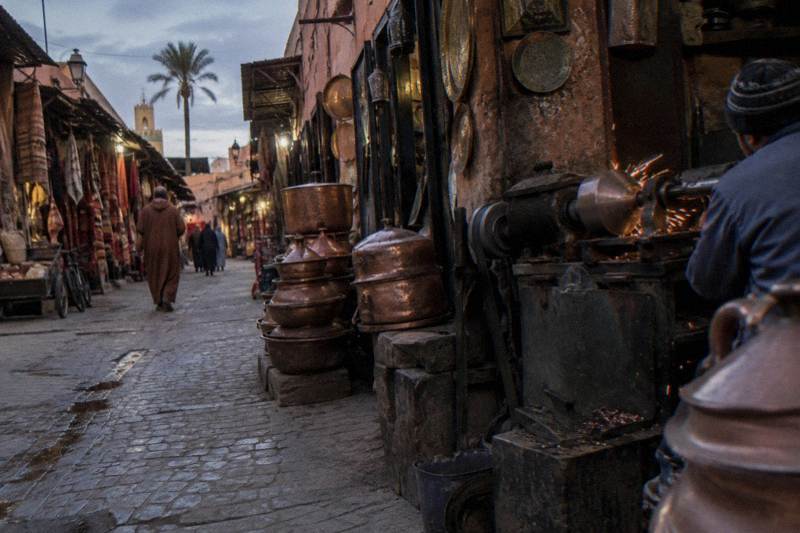
Marrakech Scams And Fake Guides: What To Watch For And How To Stay Free
Marrakech scams are mostly variations on one theme: someone offering help you did not ask for and then charging for it. Here is what the tricks actually are, what genuinely costs money, and how the free walking tour system sidesteps nearly all of it.
In Short
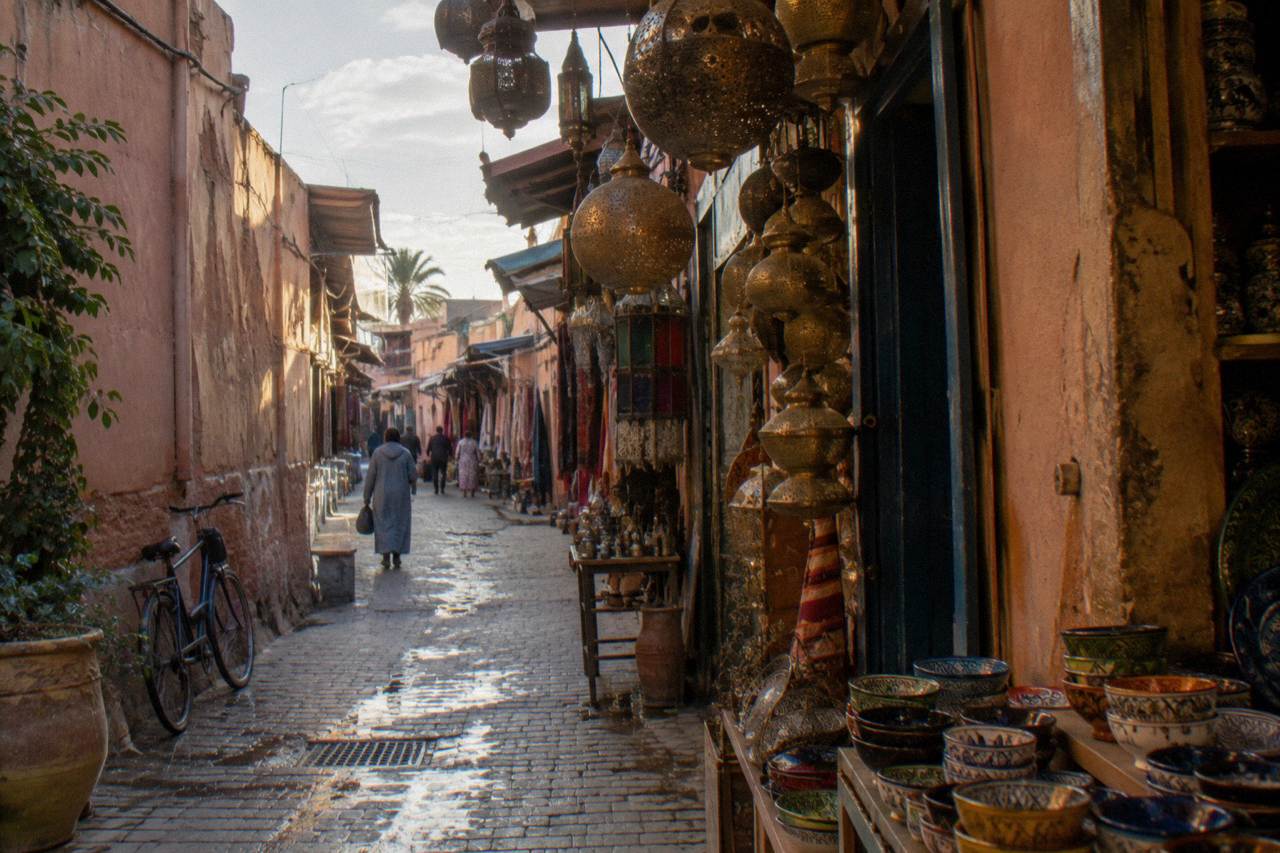
The common Marrakech scams are unofficial guides approaching you in the street, lookalike ticket reseller websites, the tannery terrace tip trap and pressure selling in the souks. Street performers and food stalls at Jemaa el-Fnaa work for tips and sales. The free side of the city is real: the square, the souk lanes, the Koutoubia gardens and 13 free walking tours reserved in advance on GuruWalk and freetour.com.
Part of the costs and planning guides, this one covers the tricks, the fake guides and the honest free alternatives.
Quick Facts
| Question | Answer |
|---|---|
| Is a free walking tour really free? | Yes. Every walk on this site is free, pay what you want, reserved on GuruWalk or freetour.com. |
| What is the fake guide scam? | Men offering unsolicited tours in the street, then demanding a fee. Tourist police are posted on the square. |
| Are ticket reseller sites safe? | Sites like bahiapalace.com and saadiantombs.com are third-party sellers, not the monuments. |
| What do the big monuments cost? | Bahia Palace, El Badi Palace, Saadian Tombs and the Almoravid Koubba: 100 MAD foreign adult. |
| Free Fridays? | Fridays and national holidays are free for Moroccan nationals only, not foreign visitors. |
| Tanneries? | No tariff exists, but viewing is from a leather shop terrace where a tip or purchase is expected. |
| Free walk options | 13 free walking tours, all pay what you want, across the medina, the souks and the night city. |
What Are Marrakech Scams And Fake Guides?
Marrakech scams are negotiation traps rather than violent crime: fake guides who attach themselves to you in the medina, lookalike websites reselling monument tickets at a markup, tannery visits that end at a shop counter, and Jemaa el-Fnaa performers demanding money once a photo is taken. Almost every scheme begins with unsolicited help, so book ahead and treat street offers as exactly what they are.
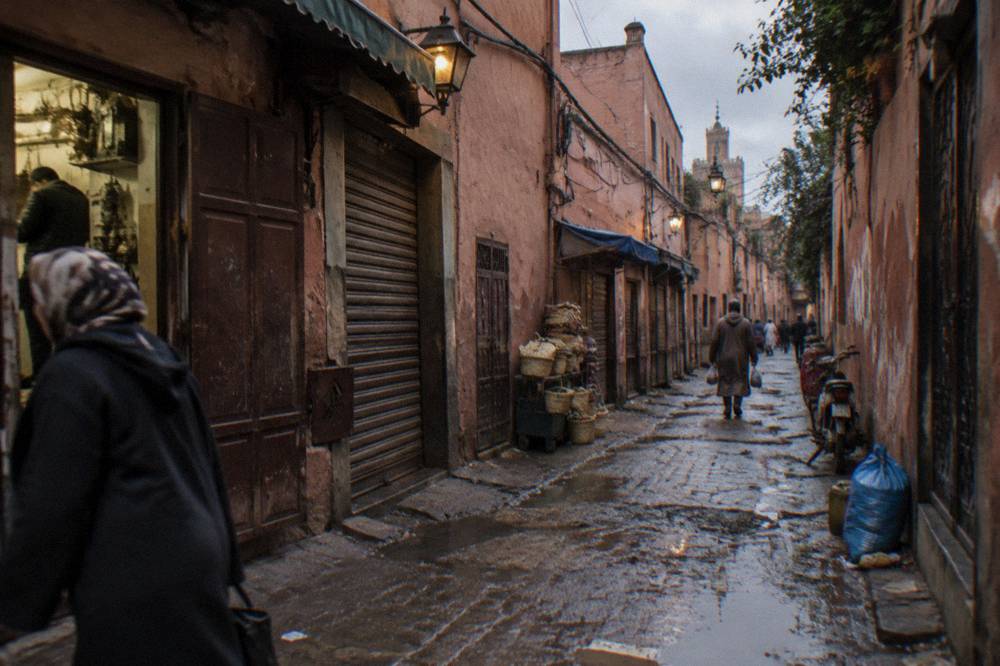
The fake guide is the oldest trick in the city. A man approaches near a landmark, offers directions or a shortcut, and gradually turns into a self-declared guide who expects payment at the end. Some will tell you a place you wanted to see is closed today and offer to take you somewhere better, which is the exact pattern reported around the tanneries at Bab Debbagh: the "it is closed today, I will guide you" line is the known setup there. Nothing about this is subtle once you know the shape of it. Help you did not ask for is the opening move, and refusing it politely, early, is the whole countermeasure.
The second family of scams lives online, before you even fly. A cluster of lookalike domains, bahiapalace.com, saadiantombs.com, badipalace.com, almoravidkoubba.com, marrakechmuseum.com, jemaa-elfnaa.com and roughly twenty-five more, present themselves as official monument pages and are in fact third-party ticket sellers. They look right, they load fast, and they charge a markup on tickets the monuments sell themselves. The Ministry of Culture runs its own e-services ticket site for Bahia Palace, El Badi Palace, the Saadian Tombs and the Almoravid Koubba, and that is the only place those monument tickets need to be bought. If a URL has the monument's name in it but is not the Ministry's platform, treat it as a shop, not a box office.
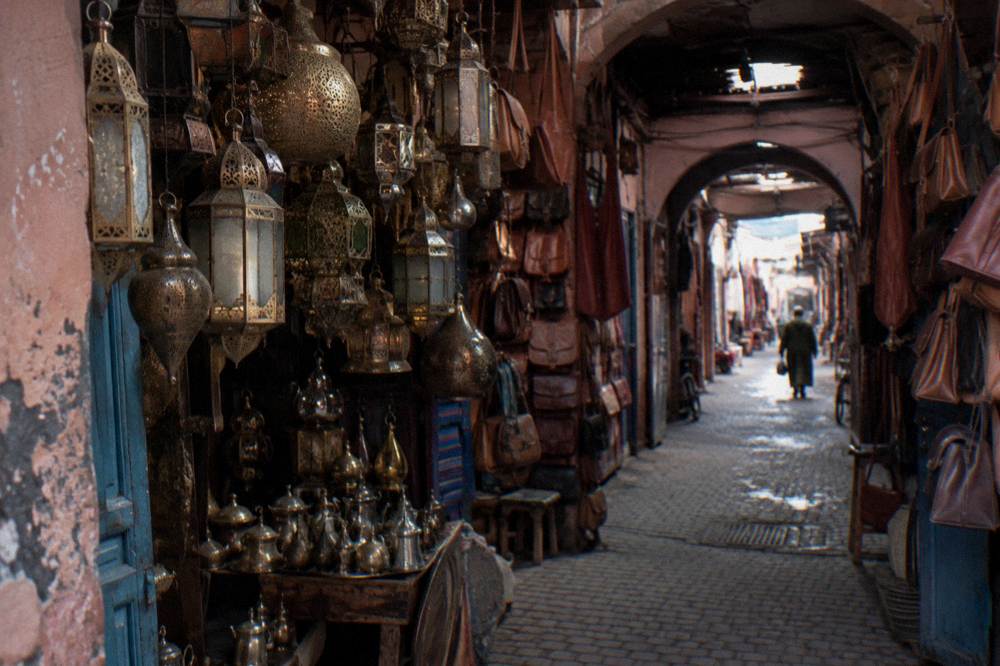
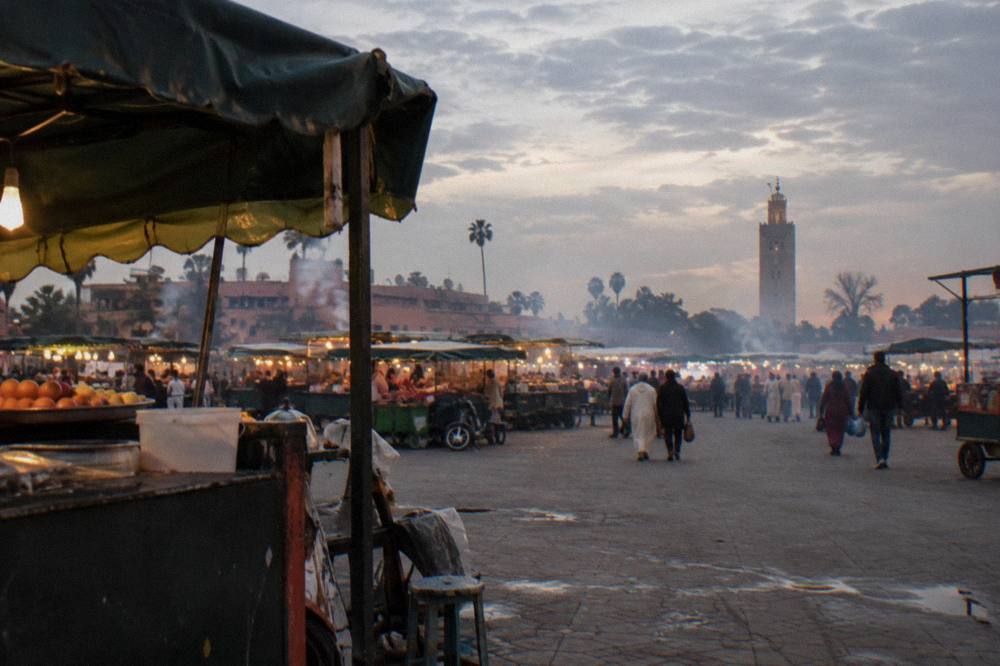
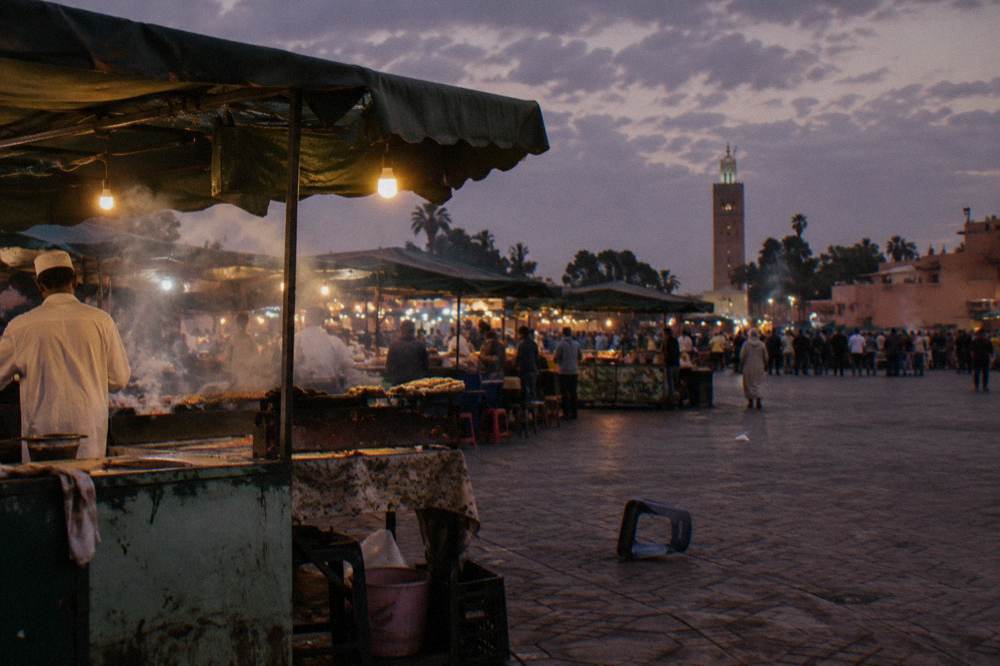
The third family happens in the open, in plain daylight, and is not illegal at all. Performers, musicians, snake charmers, monkey handlers and food stall operators at Jemaa el-Fnaa work for tips and sales; photos with performers, snake charmers or monkey handlers are asked for money. The souks work the same way by negotiation rather than fixed prices: walking the lanes is free, and the pressure to buy is the cost, not the entry. Neither of these is a scam in the criminal sense. They are commercial spaces that look like public ones, and knowing which one you are standing in is most of the protection.
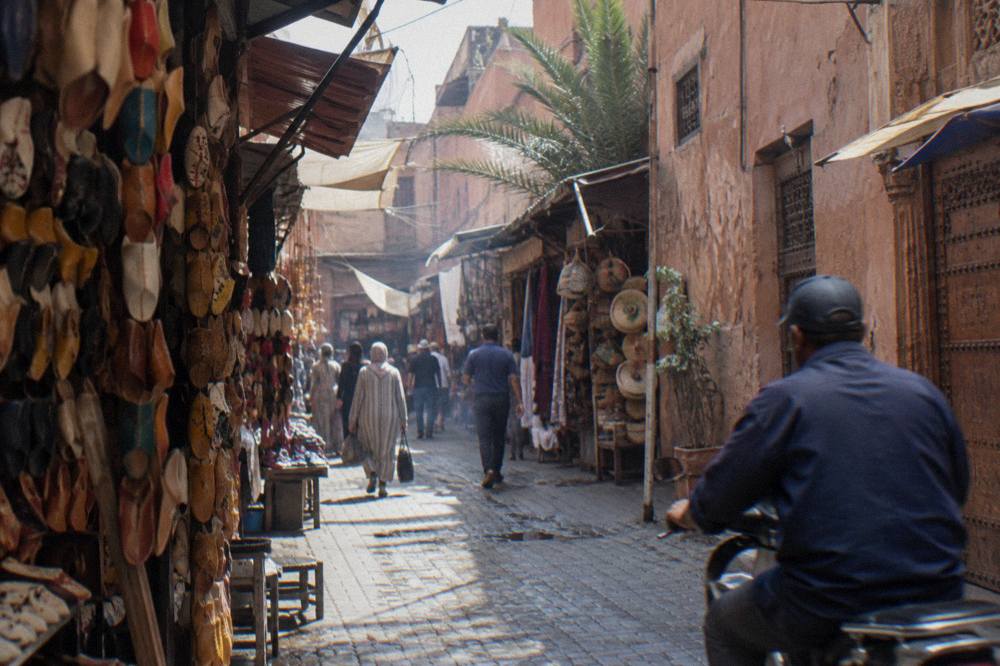
The fourth family is the conditional freebie. The tanneries at Bab Debbagh have no official entry fee, but the usual way to see the pits is from a leather shop terrace, where staff expect a tip or a purchase. That makes the visit free in name and commercial in practice, which is why this site never calls the tanneries simply free. The same logic applies to the "free Fridays" claim that circulates about the big monuments: Bahia Palace, El Badi Palace, the Saadian Tombs and the Almoravid Koubba do let Moroccan nationals in free on Fridays and the first day of national and religious holidays, and that rule does not extend to foreign visitors, who pay 100 MAD adult and 50 MAD for children aged 7 to 13. Anyone telling a foreign tourist these monuments are free on Friday is selling something.
Where the free walking tours fit into all this is the part most first-time visitors miss. The fake guide problem exists precisely because a real guide has value in a medina this dense. The 13 free walking tours on this site replace the street negotiation entirely: each is run by an independent local guide, each is free, pay what you want, and each is reserved in advance on the walk's own page, on GuruWalk or on freetour.com. A guide you booked on a platform has no reason to pretend a monument is closed, and no reason to steer you toward a cousin's shop, because the reservation already happened. For more on how that model works, see how tip based free tours actually work.
One honest note about scale. Marrakech scams are annoying and occasionally costly, but they are not dangerous, and the city's free layer, the square, the souk lanes, the Koutoubia gardens, the ramparts, the Mellah streets, costs nothing to walk. The tricks above are the full catalogue of what is documented. If you want the safety picture in full, the medina safety on a free tour guide covers it, and the rest of this page stays on the money.
What Is Free And What Costs Money?
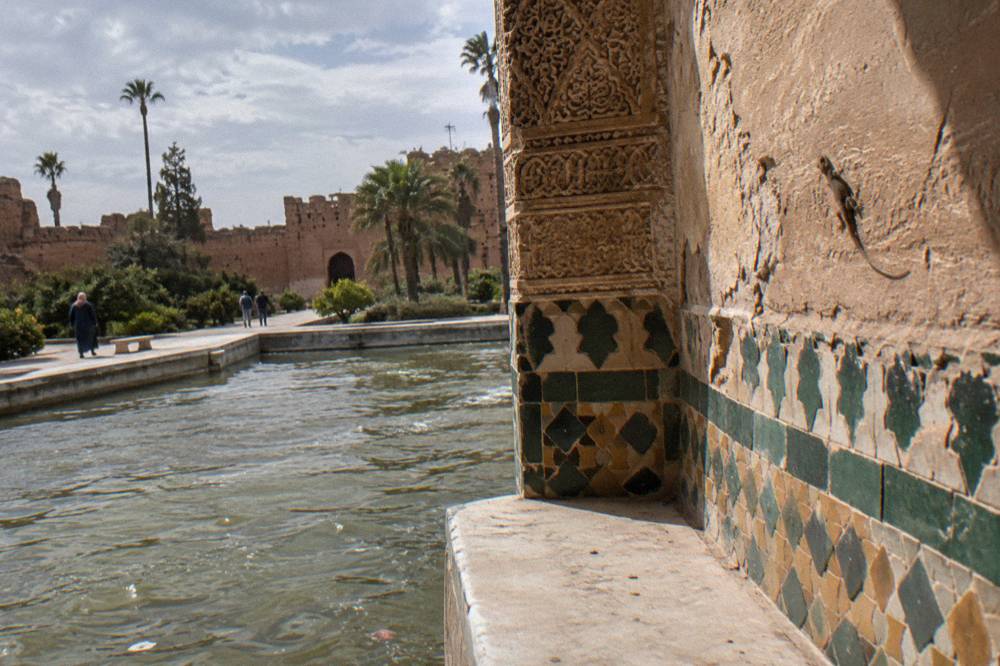
Marrakech's core sights cost nothing: Jemaa el-Fnaa around the clock, the souks, the Koutoubia exterior and gardens, Bab Agnaou and the ramparts, the Mellah, the Menara grounds, and the Palmeraie roads. The paid list is short: four Ministry monuments at 100 MAD, Jardin Majorelle at 170 MAD, Le Jardin Secret at 100 MAD plus 40 MAD for its tower, and the Menara pavilion at 60 MAD.
The scam relevance of this split is direct: most tricks work by blurring the line. A fake guide blurs it by charging for what is free. A reseller site blurs it by marking up what is paid. A henna artist or "closed today" escort blurs it by attaching a price to something that had none. Once you hold the free and paid lists firmly in your head, the tricks mostly fail on contact, because you know what the person is describing and what it actually costs.
| Place | What Is Free | What Costs Money |
|---|---|---|
| Jemaa el-Fnaa | The square itself, around the clock | Performers and food stalls work for tips and sales |
| Koutoubia Mosque | Exterior, minaret esplanade and gardens | Nothing, non-Muslims cannot enter the prayer hall, no ticket exists |
| The Souks | Walking every lane | Goods are negotiated, prices are not fixed |
| Menara Gardens | Grounds, olive grove and basin | Pavilion, 60 MAD foreign adult |
| Bahia, El Badi, Saadian Tombs, Almoravid Koubba | Nothing for foreign visitors | 100 MAD adult, 50 MAD child 7 to 13; Fridays free for Moroccan nationals only |
| Tanneries, Bab Debbagh | No official tariff exists | Viewing is from a shop terrace, tip or purchase expected |
| Bab Agnaou and ramparts | Gates and walls from the street | Some stretches may have scaffolding from ongoing works |
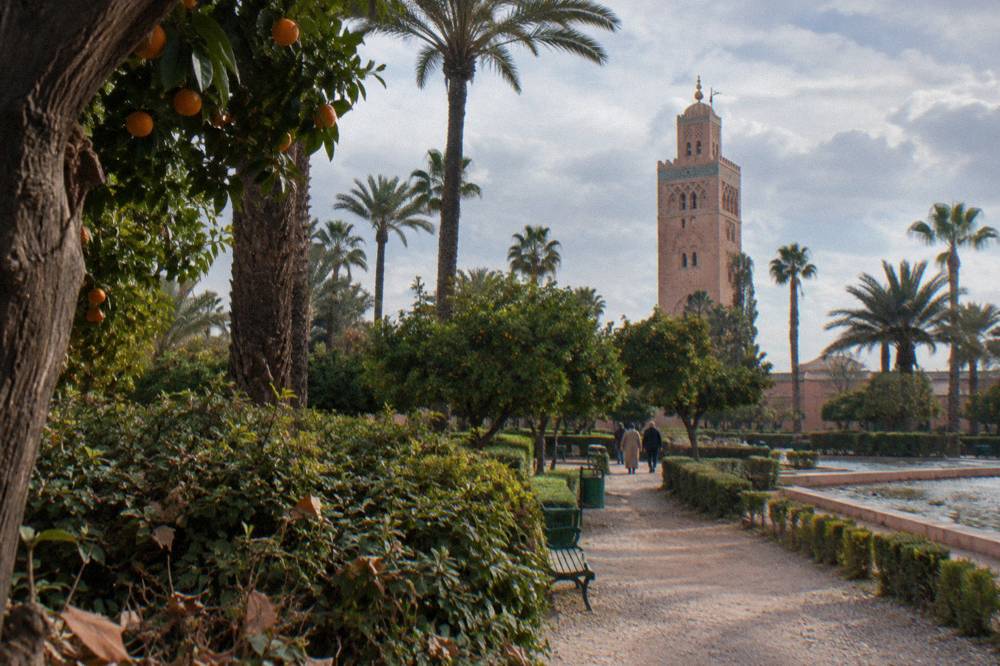
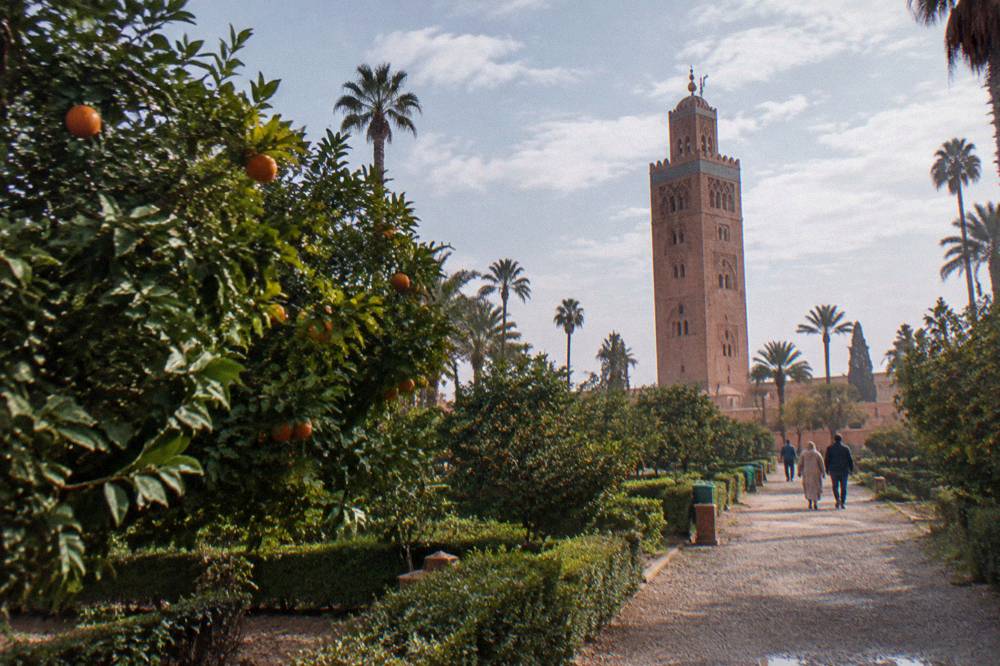
Two rows deserve their own paragraphs because they generate the most confusion. The Koutoubia is two facts, not one: the minaret, the esplanade and the Koutoubia Gardens are free to walk and view from outside, open to everyone, while the prayer hall is closed to non-Muslim visitors and no ticket exists that changes that. Nobody can sell you Koutoubia entry, and anyone claiming to arrange it is describing the gardens, which are already free. The Koutoubia exterior and gardens guide covers this in full.
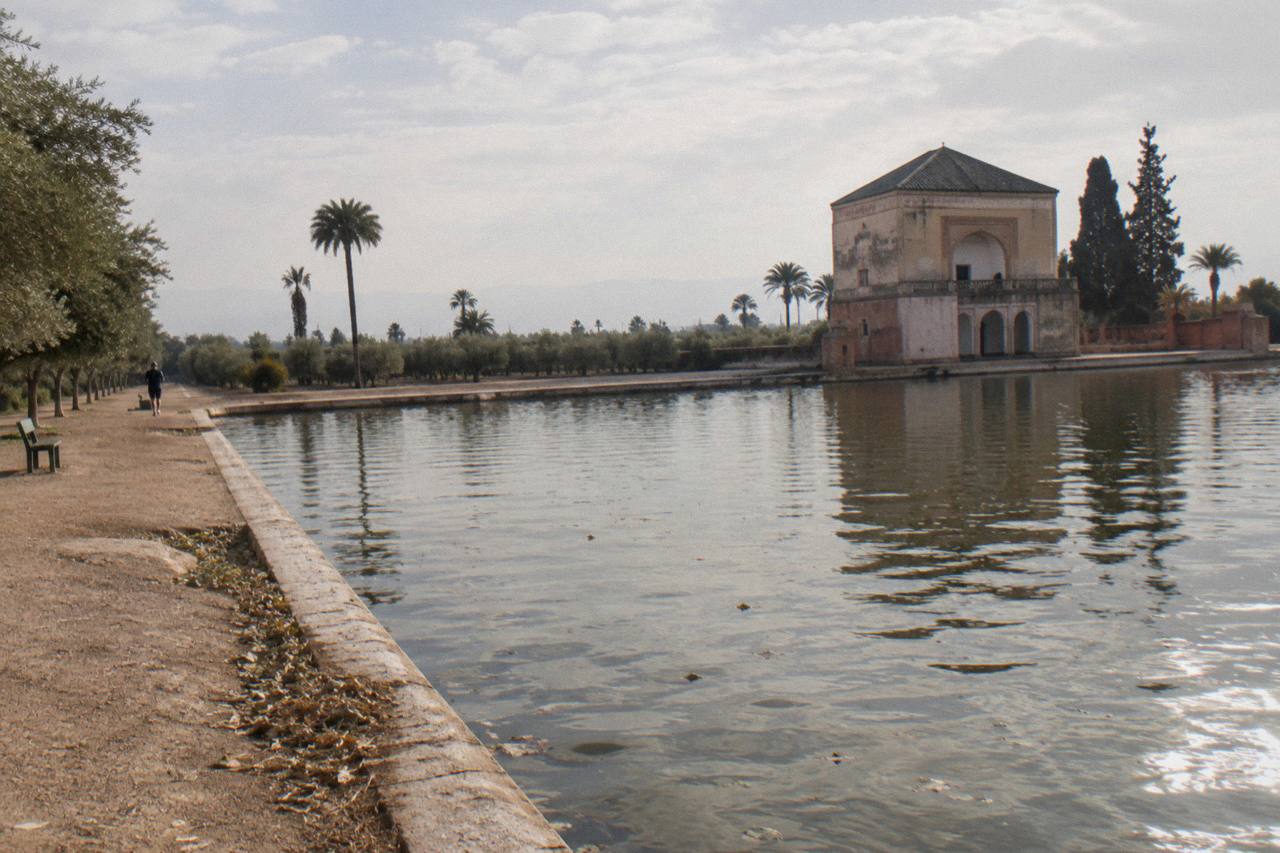
The Menara is the same shape of mistake in reverse. The gardens, the olive grove and the basin with its view of the Atlas are free to enter, open daily. The pavilion at the water's edge is a Ministry of Culture ticket site at 60 MAD for foreign adults, 30 MAD for children aged 7 to 13. A tower, pavilion or museum never inherits its garden's status, which is the single sentence worth remembering across the whole city: Le Jardin Secret's garden is 100 MAD and its tower is another 40 MAD on top, and the Berber Museum and Yves Saint Laurent museum at Majorelle are separate tickets whose prices are not published here.
Jardin Majorelle deserves its own warning because it is the monument most targeted by resellers. The garden's public price is 170 MAD, with Moroccan citizens and foreign residents at 75 MAD, international students at 95 MAD, and children under 10 free with an adult, and it sells online only, with timed tickets, through its own site at jardinmajorelle.com. Because Majorelle sells timed tickets online only, resellers have a real story to tell, and the markup arrives dressed as convenience. Buy at the garden's own site or accept the risk. The free green alternatives, including the Menara grounds and the Koutoubia Gardens, are laid out in free gardens beyond the medina.
Against all of that paid structure, the walks stand out precisely because there is nothing to blur. Three of the options above illustrate it. The Medina Walk From Jemaa el-Fnaa is a GuruWalk walk rated 4.85 out of 5 across 235 GuruWalk reviews, 2 hours 30 minutes, meeting at Jemaa el-Fnaa main square, in English. Boufous Historical Walk, also on GuruWalk, is rated 4.84 out of 5 across 31 GuruWalk reviews, 2 hours 30 minutes, meeting at Cafe Argana on Jemaa el-Fnaa. The English Walk, 2 Hours 15 meets at the white dome on Koutoubia square and carries 4.91 out of 5 across 1,171 GuruWalk reviews. None of the three involves a price at any point, and each is reserved on GuruWalk before you set out, which removes the negotiation that the whole scam economy feeds on.
Souk haggling deserves a last word under this heading because it is where "how to haggle in Marrakech" meets the scam question. There is no fixed price in most of the souks, and that is not fraud, it is the system. The pressure to buy is the cost of entry, as the souks guide puts it, and the practical defence is to decide before engaging whether you want the object, walk away without ceremony if not, and never let a purchase become a friendship you feel rude ending. If you want the full souk walkthrough, the souks on a free walking tour guide covers the lanes, the pressure and the ways out.

When Is The Best Time To Go?
No scam-free hour exists here, only different scams by time of day, so go when the scene you want is live: daylight brings shop tricks and fake guide approaches around the medina and souks, while evening brings Jemaa el-Fnaa's musicians, storytellers and food stalls, where tips are the business model. GuruWalk covers both, from daytime medina walks to a 2-hour night walk rated 4.88 out of 5.
No crowd, queue or quiet-hour claims appear anywhere on this site, so the timing question here is about which economy is active, not which hour is emptier. The daytime medina is the domain of the shop-adjacent tricks: unsolicited guides, the tannery terrace route, the souvenir negotiation. The evening square is the domain of the performer economy, which is not a scam at all but does cost money if you photograph, handle or taste. These are different budgets with the same defence: know before you arrive what the interaction costs, and decline what you have not priced.
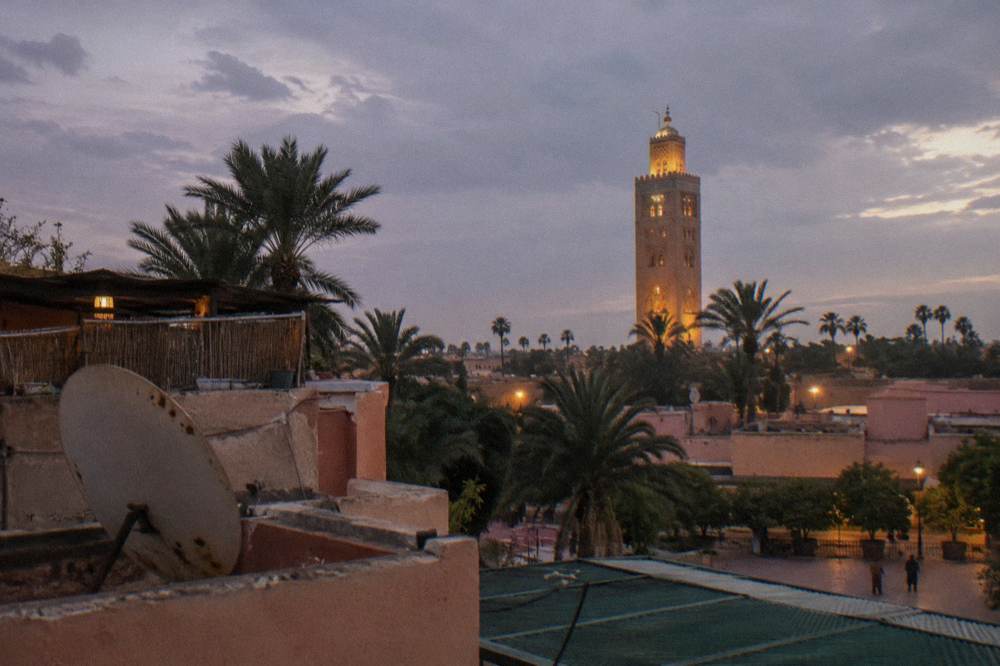
The night walks are the underrated answer. Secrets of the Medina: Discover Marrakech by Night, a GuruWalk walk run by Abdellah, is rated 4.88 out of 5 across 91 GuruWalk reviews, runs 2 hours, in English, and meets at the white dome on Koutoubia square. The Best of Marrakesh Stories by Night, run by hmmed, meets at Hotel Ali on Rue Moulay Ismail, runs 2 hours 30 minutes and carries 4.27 out of 5 across 22 GuruWalk reviews; it is free to join but its GuruWalk page flags possible extra costs such as entrance fees. Walking the night square with a reserved group converts the most disorienting hour of the city into the most manageable one, which is exactly what the Marrakech at night guide is about.
On the day side, the daytime walks on this site run from 1 hour to 4 hours, and most sit in the 2-to-3 hour range, which fits the medina's scale: the shortest is a 1-hour express option with too few reviews for a score yet, and the longest is Guided Tours Of The City Of Marrakech By Jamal, a GuruWalk walk rated 4.63 out of 5 across 275 GuruWalk reviews, free to join but with its page flagging possible extra costs such as entrance fees. Season-by-season timing is its own question, covered in the best time for a Marrakech walking tour, and winter has its own page for the cold-shoulder-season version of the city in free things to do in Marrakech in winter.
The one timing rule this page will state firmly: reserve before you go, whatever the hour. Every walk here is free, pay what you want, but it is reserved on its platform, GuruWalk or freetour.com, and a reservation made in advance is what removes the street-level negotiation entirely. A guide expecting you at the white dome or at Cafe Argana has no incentive to reroute you; a man who found you in a lane has nothing but incentives. For the full contrast, free versus paid walking tours sets the models side by side.
Where Do Free Walking Tours Meet Nearby?
Free walking tours meet at fixed, public spots named in advance when you book with a guide on GuruWalk or freetour.com, and those points cluster in three areas: the Koutoubia end of the medina, Jemaa el-Fnaa square itself, and a couple of night-walk addresses off the square. Nothing is arranged on the street, in a lane, or by someone who approaches you.
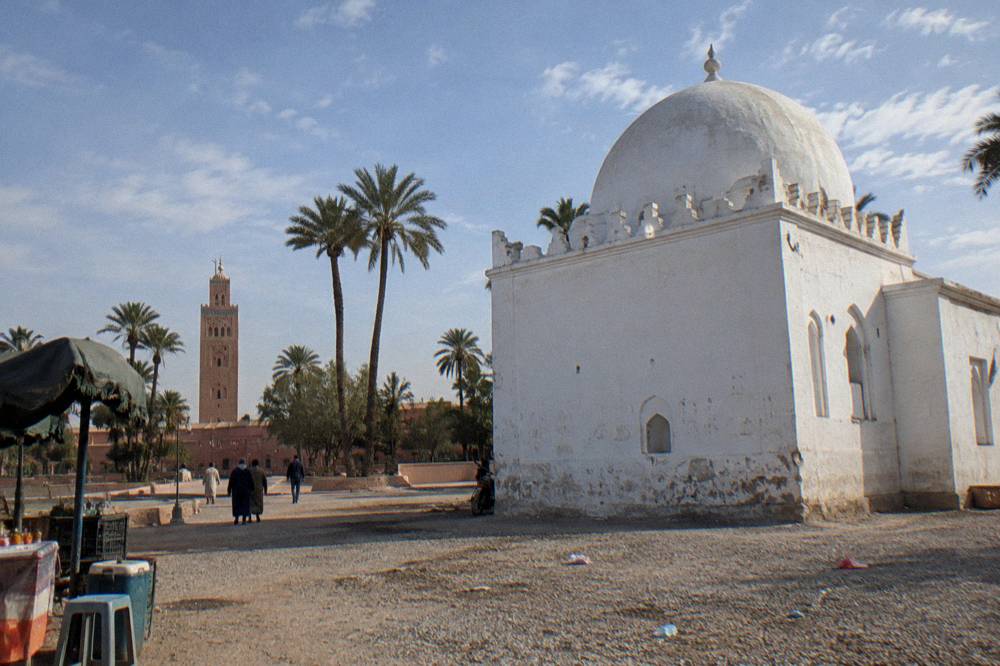
The Koutoubia cluster covers the central medina walks. Youssef's English City Guide meets at the white shrine near the Koutoubia; the English Walk, 2 Hours 15 meets at the white dome on Koutoubia square; Mustapha's 2-Hour Medina Walk meets at Koutoubia Mosque square; Jalil's Local Life Walk meets at the foot of the Koutoubia minaret; and the 4-Hour Extended City Walk meets at Koutoubia Mosque, next to the Kubba Fatima Zohra. All are GuruWalk walks, all in English, and the square itself, with the mosque exterior and the free Koutoubia Gardens beside it, is the city's most obvious pre-walk waiting room.
| Walk | Platform | Meeting Point | Duration |
|---|---|---|---|
| Youssef's English City Guide | GuruWalk | White shrine near the Koutoubia | 2 hours 30 minutes |
| English Walk, 2 Hours 15 | GuruWalk | White dome, Koutoubia square | 2 hours 15 minutes |
| Mustapha's 2-Hour Medina Walk | GuruWalk | Koutoubia Mosque square | 2 hours |
| Jalil's Local Life Walk | GuruWalk | Foot of the Koutoubia minaret | 2 hours 30 minutes |
| 4-Hour Extended City Walk | GuruWalk | Koutoubia Mosque, next to the Kubba Fatima Zohra | 4 hours |
| Medina Walk From Jemaa El-Fnaa | GuruWalk | Jemaa el-Fnaa main square | 2 hours 30 minutes |
| English Old City, 2 Hours 45 | freetour.com | Cafe Restaurant Le Samovar | 2 hours 45 minutes |
| Marrakesh Imperial Tours, 3 Hours | freetour.com | Hotel Restaurant Cafe de France | 3 hours |
| English Sightseeing Walk, 2 Hours 45 | freetour.com | Jemaa el-Fnaa Square | 2 hours 45 minutes |
| 2-Hour Night Walk | GuruWalk | White dome, Koutoubia square | 2 hours |
| Night Stories, 2 Hours 30 | GuruWalk | Hotel Ali, Rue Moulay Ismail | 2 hours 30 minutes |
The Jemaa el-Fnaa cluster is where the freetour.com walks meet, and each of those names its platform openly. English Old City, 2 Hours 45 is listed on freetour.com, rated 9.6 out of 10 across 938 freetour.com reviews, in English, meeting at Cafe Restaurant Le Samovar. Because freetour.com scores run out of 10 rather than out of 5, the figure is not comparable with a GuruWalk rating, and this site never averages or ranks the two together. The walk itself is the strongest-reviewed freetour.com option in the city and the natural first reservation for anyone whose main worry is being separated from their money by strangers.
Marrakesh Imperial Tours, 3 Hours is also on freetour.com, rated 8.4 out of 10 across 474 freetour.com reviews, run in English and Italian, meeting at Hotel Restaurant Cafe de France on the square. The operator's own name is Marrakesh Imperial Tours, and the walk covers the imperial-city side of Marrakech's story across a full 3 hours. For visitors who want the longest daytime option that still carries no price, this is the one, and its meeting point, a named hotel restaurant on the main square, is as hard to fake as a meeting point gets.
The third freetour.com walk, English Sightseeing Walk, 2 Hours 45, is rated 9.9 out of 10 across 62 freetour.com reviews, in English, meeting at Jemaa el-Fnaa Square itself, and its page prints no guide name. A 9.9 from 62 reviews is a small pool with an emphatic verdict, and this site prints the count beside the score so you can weigh both. It is one of the freetour.com walks here and a compact way to see the square-and-souks ground with a reserved guide.
One walk on this site is page-only and carries no card: Free Walking Tour Great Places Around Marrakesh, a GuruWalk walk in English and French, 1 hour, meeting at Jemaa el-Fnaa, with 2 reviews, too few for a score yet. It is introduced here only by its platform, meeting point, duration and languages, exactly as its own page presents it. The remaining GuruWalk entries in the table above round out the full shipped set of 13 free walking tours, and each keeps the same rule that matters for this article's topic: a named meeting point, a booked slot, and no price discussed on any street corner. If you are planning a whole day rather than a single walk, the one day budget route strings the free pieces together.
What Mistakes Do People Make With Marrakech Scams?
The costly mistakes are consistent: buying monument tickets from lookalike domains instead of the Ministry of Culture's own platform, believing the Friday free-entry rule applies to foreign visitors, following someone to a tannery terrace without knowing a tip or purchase is expected, photographing performers without pricing the interaction, and accepting guiding services from men who approach you rather than from a reserved free tour. Each mistake has a one-line fix, and none of the fixes costs a dirham.
The reseller domain mistake is the most expensive and the easiest to avoid. The Ministry of Culture's e-services platform sells the Bahia Palace, El Badi Palace, Saadian Tombs and Almoravid Koubba tickets directly, one per monument, and has done since 3 April 2025, with online prices running 30 to 60 MAD across all Moroccan sites. The lookalike domains are not that platform. The fix is to type the Ministry's address yourself rather than follow a search result whose domain is the monument's name, because the monument's name in a domain is the reseller's business model, not a sign of authority. The same logic protects your Majorelle visit: the garden sells online only, timed, at jardinmajorelle.com, at a public price of 170 MAD.
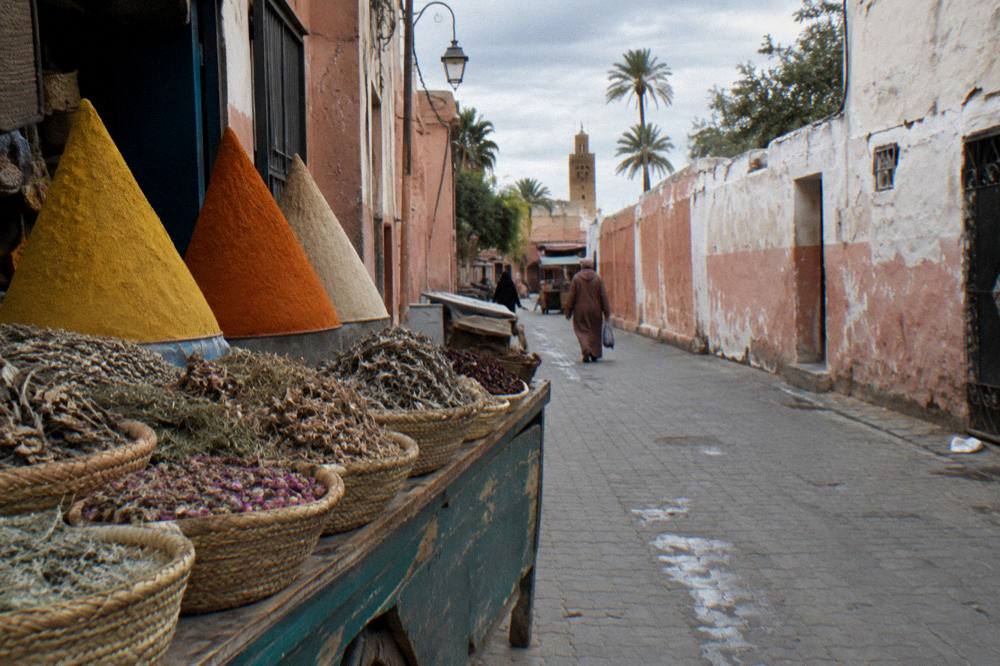
The Friday mistake is the most common honest misunderstanding. Free Fridays at the four Ministry monuments are for Moroccan nationals, and the 30 MAD rate needs a Moroccan or resident document. A foreign adult pays 100 MAD, a child aged 7 to 13 pays 50 MAD, on Friday exactly as on any other day. Guides and blogs that repeat the free-Friday claim without the nationality condition are the reason this mistake survives, and it is worth being blunt in a sentence: no day of the week makes these monuments free for a foreign visitor.
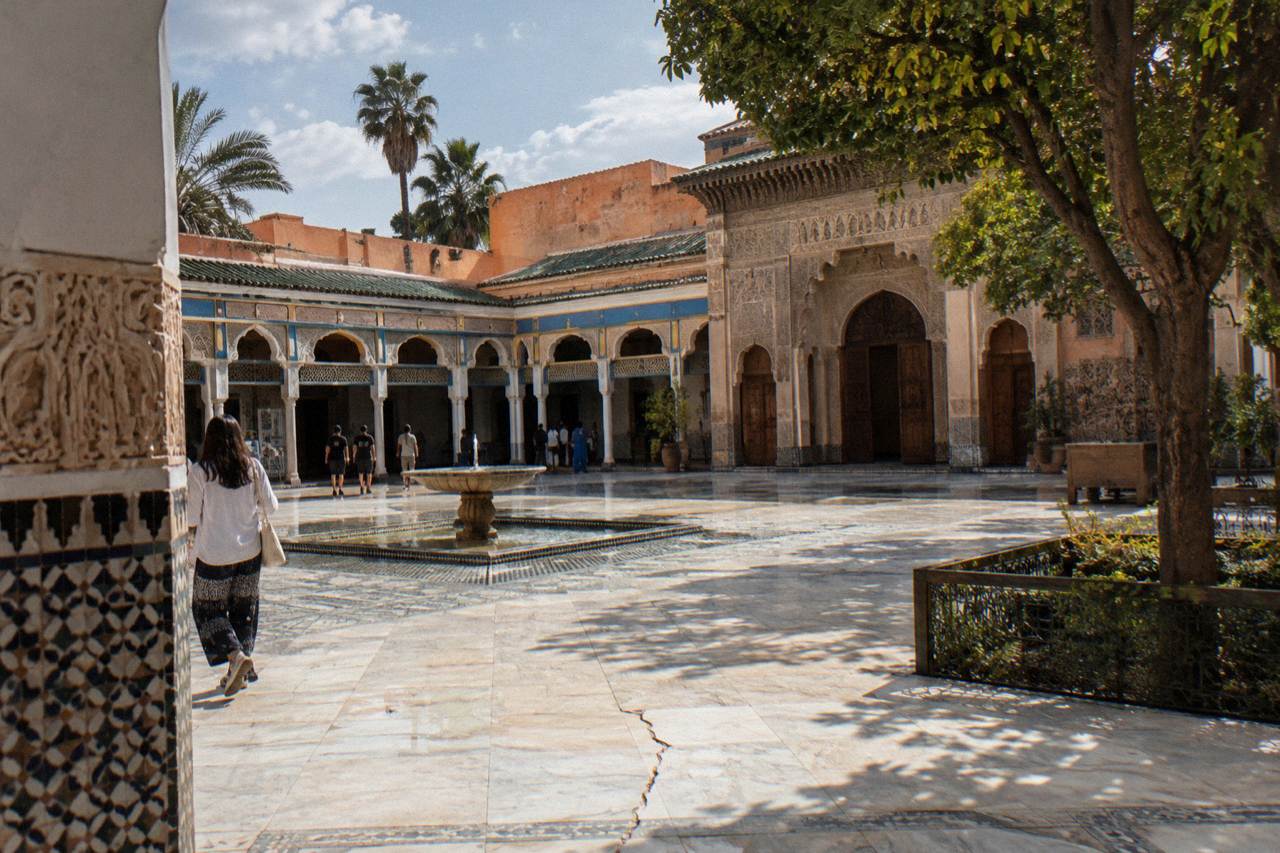
The tannery mistake is the one with the most insidious setup, because the approach is warm. There is no tariff at the tanneries, and there is no honest way to call them free either: viewing the pits is normally from a leather shop terrace where a tip or a purchase is expected, and the "it is closed today, I will guide you" line is the documented opener. The fix is to know both halves before you are anywhere near Bab Debbagh, and to treat any closed-today claim about any monument as a sales pitch rather than information, since the genuine reopening status of the big monuments, back since October 2023 with works continuing, has nothing to do with a stranger in a lane.
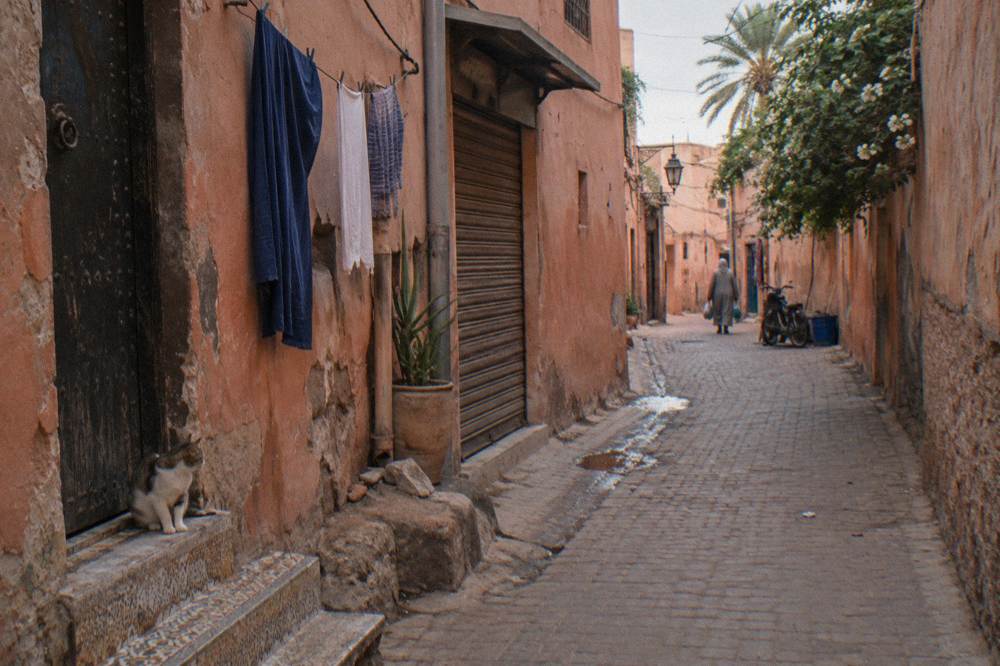
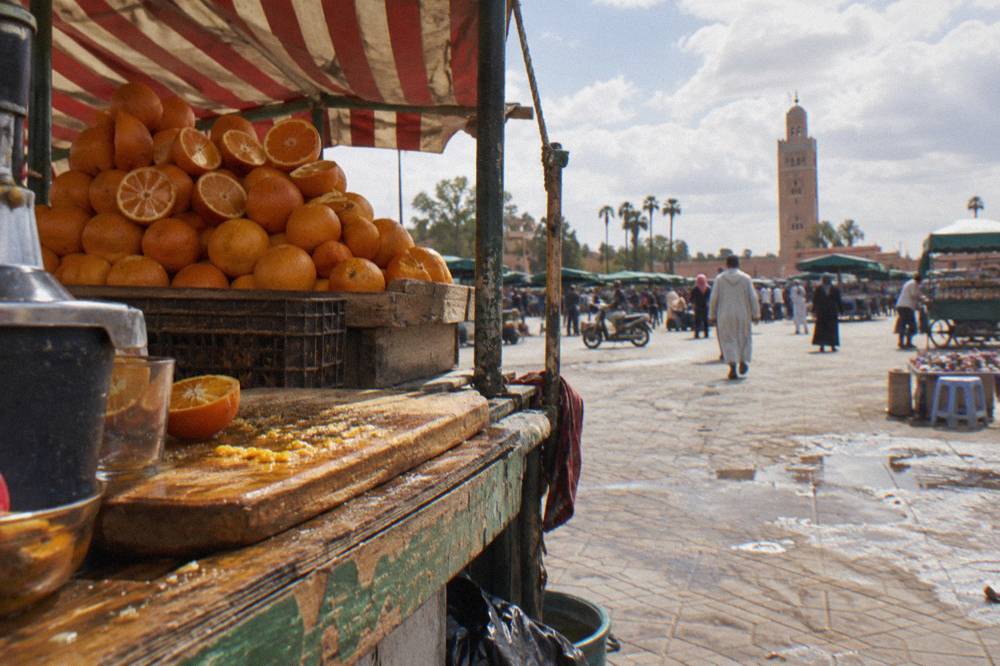
The performer mistake is the smallest and the most frequent. At Jemaa el-Fnaa, photos with performers, snake charmers or monkey handlers are asked for money, and the food stalls work for tips and sales. This is not concealed, but it is also not signed, and the interaction begins visually, before any price exists in the exchange. Decide what a photo is worth to you before you raise a camera toward anyone working the square, or simply photograph the square and not the performers. The Jemaa el-Fna costs guide breaks the square's economy down item by item.
The last mistake is the meta one: treating every warning as a reason to avoid the medina entirely. The free layer of this city is real and walkable, and the what Marrakech is known for guide shows how much of it a reserved free tour puts in front of you. The scams in this article are a catalogue of negotiation traps, not a crime wave, and a visitor who books walks on Free Things To Do In Marrakech before leaving home has removed the negotiation from the largest share of them.
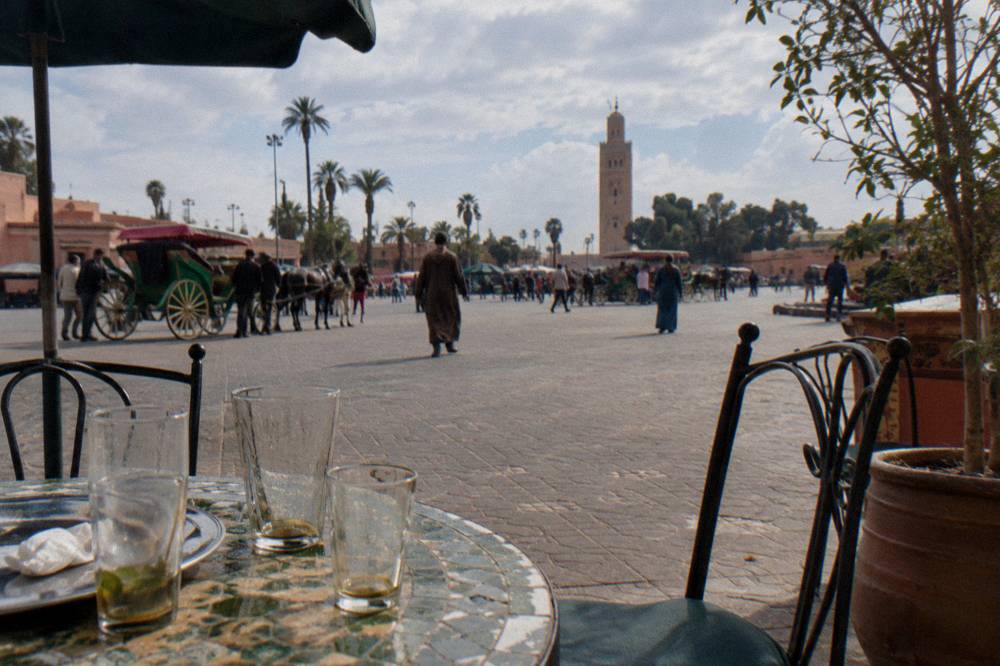
The three walks above close this page because they span the whole anti-scam argument. Mustapha's 2-Hour Medina Walk is rated 4.9 out of 5 across 987 GuruWalk reviews and meets at Koutoubia Mosque square; its GuruWalk page flags possible extra costs such as entrance fees. Youssef's English City Guide, a free, pay what you want walk, carries 4.78 out of 5 across 1,173 GuruWalk reviews over 2 hours 30 minutes from the white shrine near the Koutoubia. Jalil's Local Life Walk, 4.59 out of 5 across 301 GuruWalk reviews, meets at the foot of the Koutoubia minaret, and its page also flags possible extra costs such as entrance fees. Every one is free, pay what you want, reserved in advance, and met at a named public point: the exact opposite of a transaction that begins when a stranger says hello.
Common Questions
Are Fake Guides A Big Problem In Marrakech?
Unofficial guides approaching visitors are a documented nuisance in the medina, especially around the big monuments and the tanneries, where the "it is closed today" line is the known opener. The problem is negotiation, not violence. A reserved free walking tour on GuruWalk or freetour.com removes the encounter entirely, because your guide is booked and waiting at a named meeting point.
How Do I Spot A Fake Official Ticket Website?
Lookalike reseller domains put the monument's name in the web address, for example bahiapalace.com or saadiantombs.com, and charge markups on tickets sold cheaper elsewhere. The Ministry of Culture runs its own e-services ticket platform for the big monuments, and Jardin Majorelle sells only at its own site. Type the real address yourself rather than following a search result.
Is It Rude To Refuse Help In The Street?
No, and in the medina it is often the correct response. Unrequested offers of directions or guiding are the opening move of the fake guide pattern, and refusing politely, early, ends it. Help you actually sought, from a booked guide at a meeting point or from a shopkeeper you are already buying from, is a different thing entirely.
Are The Monuments Free On Fridays?
Only for Moroccan nationals. Bahia Palace, El Badi Palace, the Saadian Tombs and the Almoravid Koubba let Moroccan nationals in free on Fridays and the first day of national and religious holidays, and the 30 MAD rate needs a Moroccan or resident document. Foreign visitors pay 100 MAD adult and 50 MAD for children aged 7 to 13 on every day.
Do I Have To Pay Anything To Join A Free Walking Tour?
Every walk on this site is free, pay what you want, and reserved on its platform before you go. Freetour.com describes its walks as tip based. No amount is printed on this site, and how much a walk is worth is entirely the walker's decision. There is no fee demanded at a meeting point.
How Do I Haggle Safely In The Marrakech Souks?
Souk prices are not fixed, and walking the lanes is free; the pressure to buy is the cost, not the entry. Decide whether you want an object before you engage, treat the first price as an opening rather than a fact, and walk away without ceremony if the number stops making sense. A purchase is a transaction, not a friendship you owe an exit from.