The Mellah And Jewish Quarter Of Marrakech: What To See For Free
The Mellah is the old Jewish quarter of Marrakech, sitting beside Bahia Palace on the medina's southern edge. Walking its lanes and its market costs nothing, and it sits within easy reach of free meeting points used by 13 free walking tours across the city.
In Short
The Mellah's streets and market lanes are free to walk, with no ticket and no opening hour. Bahia Palace and El Badi Palace, both on or beside the quarter, charge foreign adults 100 MAD each. Nearby free walking tours meet at points around the Koutoubia and Jemaa el-Fnaa, including Unveiling the Secrets of Marrakech, rated 4.91 out of 5 across 1,171 GuruWalk reviews.
Part of the Marrakech places guides series, this one covers the quarter most visitors walk past on their way to a palace ticket booth.
Quick Facts
| Fact | Detail |
|---|---|
| The Mellah streets and market | Free to walk, no ticket, open public space |
| Bahia Palace (borders the Mellah) | 100 MAD foreign adult, 50 MAD child 7 to 13 |
| El Badi Palace | 100 MAD foreign adult, 50 MAD child 7 to 13 |
| Free Fridays at ministry monuments | Moroccan nationals only, first day of national and religious holidays included |
| Place des Ferblantiers | Free public square, no ticket |
| Bab Agnaou and the ramparts | Free to see from the street, some stretches may have scaffolding |
| Free walks nearby | 13 free walking tours across Marrakech, meeting around the Koutoubia and Jemaa el-Fnaa |
What Is The Mellah And Jewish Quarter Of Marrakech?
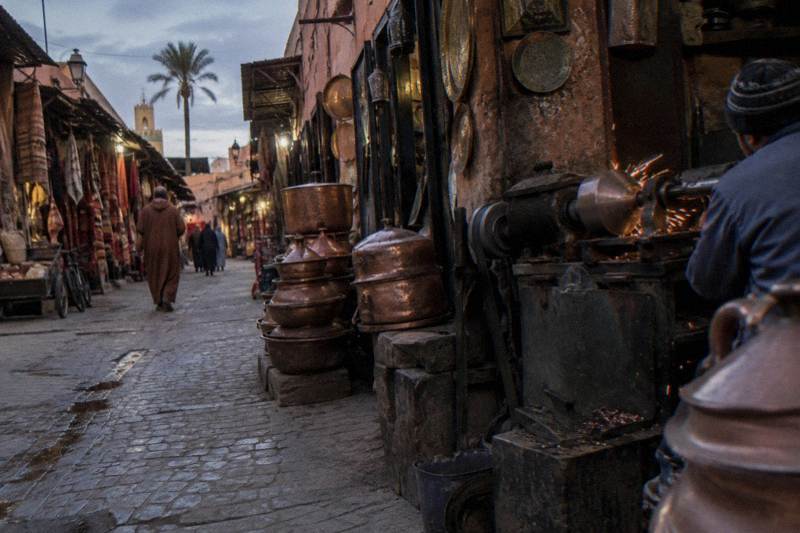
The Mellah is the former Jewish quarter of Marrakech, a district of tight lanes and a busy market that sits on the southern edge of the medina, beside Bahia Palace and Place des Ferblantiers. Walking the whole quarter costs nothing: the streets are public, the market lanes are public, and there is no gate, ticket or closing time for the district itself. What separates a free visit from a paid one is entirely about which buildings you step inside, because the palaces that frame the quarter charge foreign adults 100 MAD each, while the streets between them never do.
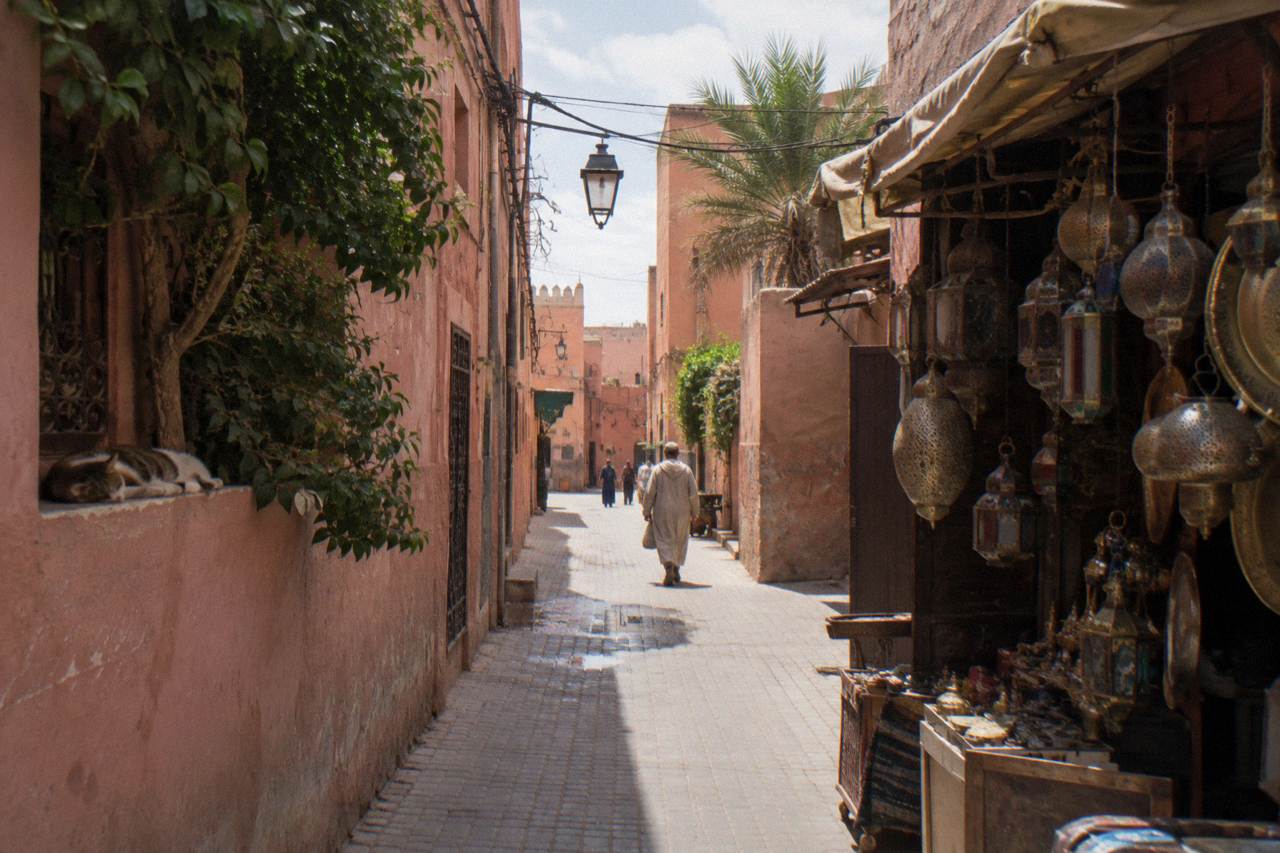
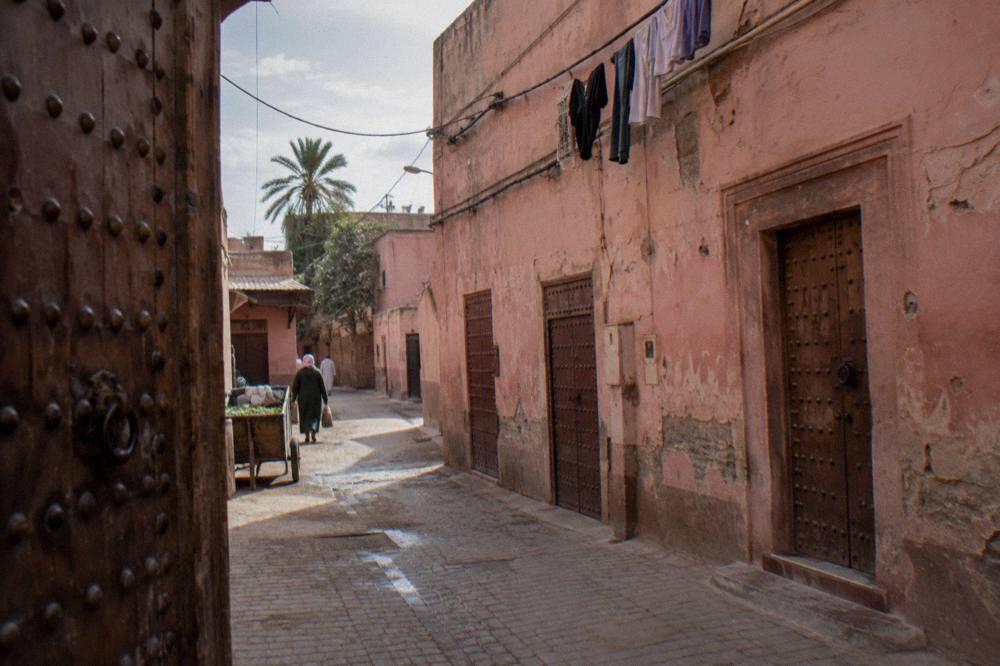
The quarter works as a walking destination in a way the bigger monuments do not. You enter it the way locals do, through lanes where sellers trade spices, second-hand goods and clothing, and where the press of daily commerce is the actual attraction. The Marrakech facts on this site record the Mellah's streets and market as free, open public space, with no ticket and no published hours, which puts it in the same category as Jemaa el-Fnaa and the souks: places you can simply walk into. The one honest caveat is commerce itself. Market lanes in Marrakech are working retail spaces, and the cost of the Mellah is not entry but whatever you end up buying, because prices in these lanes are not fixed.
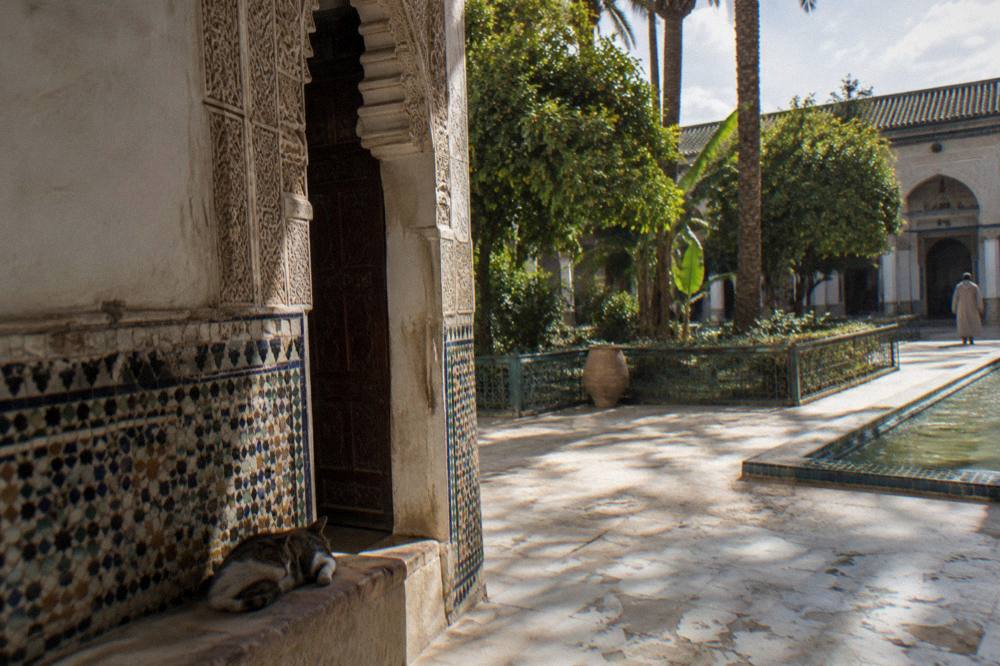
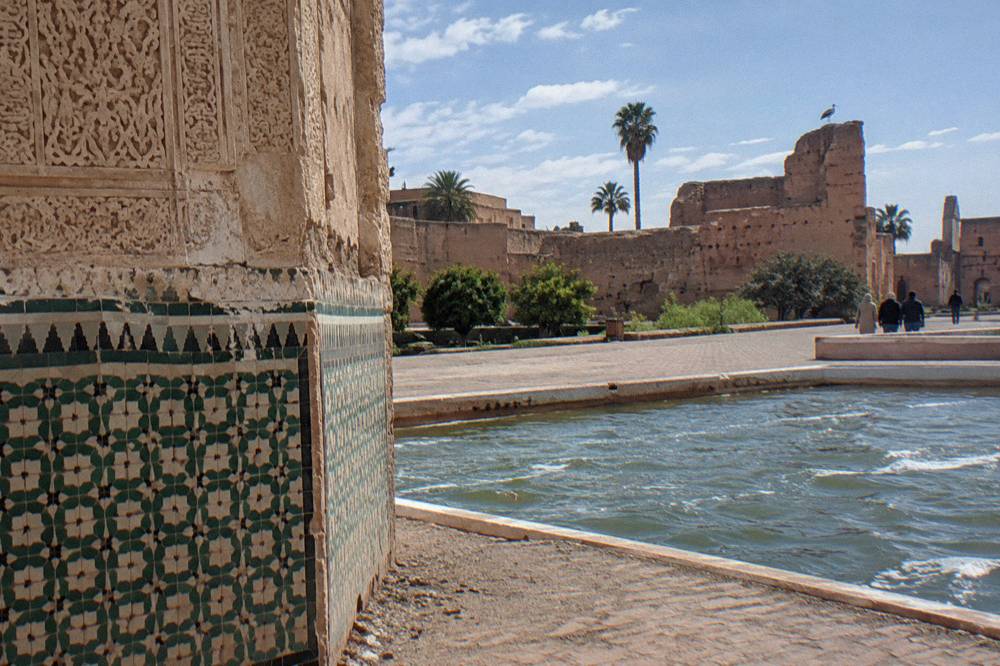
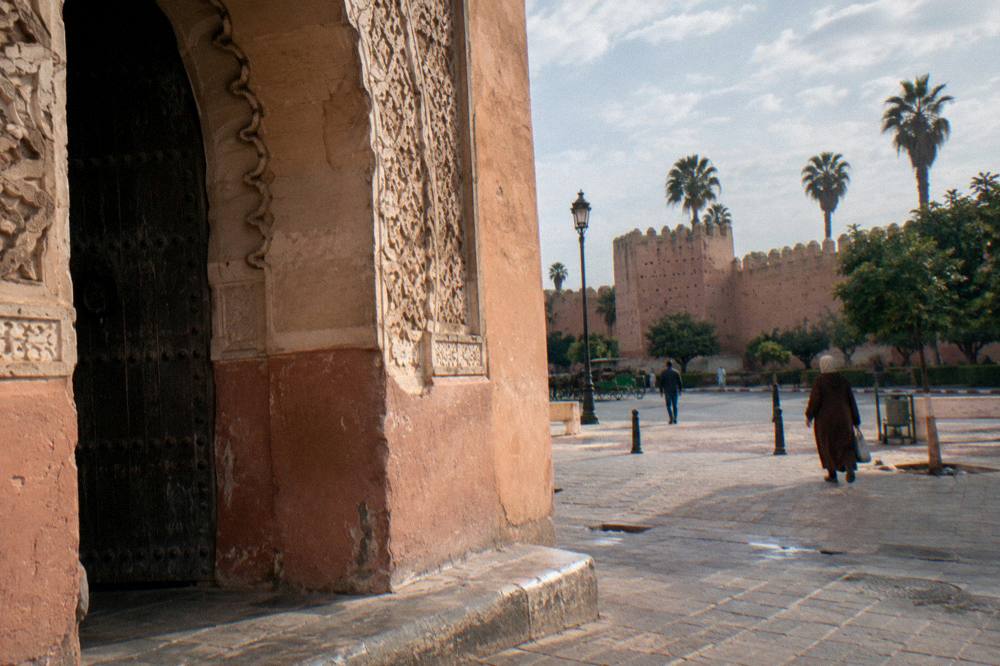
Geographically, the quarter is one of the easiest free areas to bolt onto a palace visit or a medina walk. Place des Ferblantiers, the square on its western side, is itself a free public space, and Bab Agnaou, the Almohad gate in the city ramparts, stands a short distance to the south. The ramparts and their gates are free to see from the street at any hour, though sections damaged in 2023 are still being restored, so some stretches may carry scaffolding. That cluster, square, gate, walls and lanes, forms a free circuit that needs no ticket at any point.
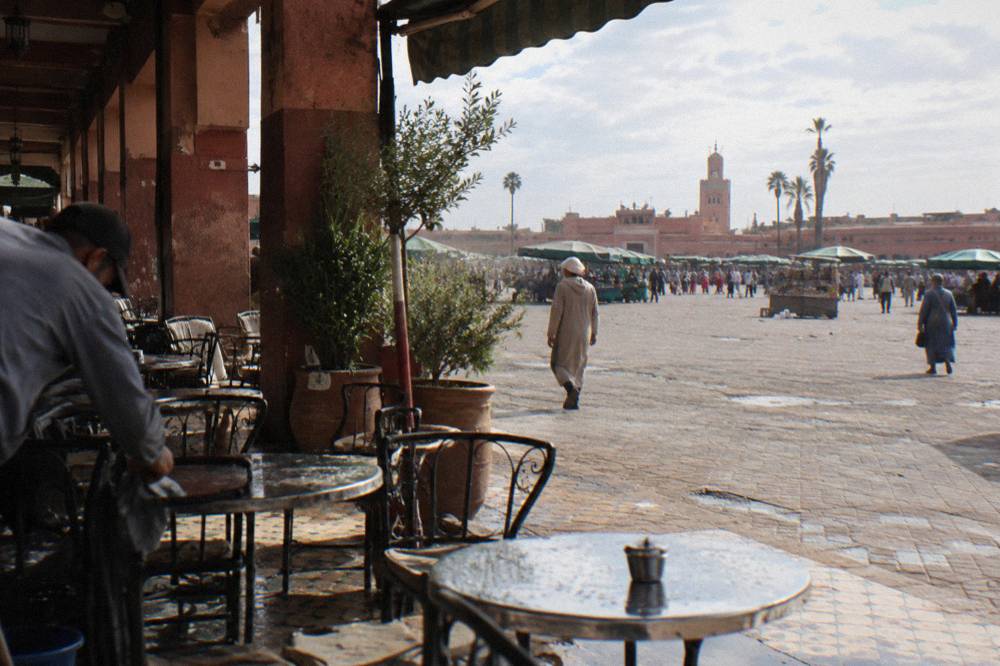
If you are building a wider picture of the city before you go, the medina walking tour route and streets guide explains how the medina's districts fit together, and what Marrakech is known for lists the sights you pass on a typical free walk. For the quarter itself, the honest summary is simple: the Mellah is a free district with paid buildings inside and beside it, and knowing which is which is the whole game.
What Is Free And What Costs Money?
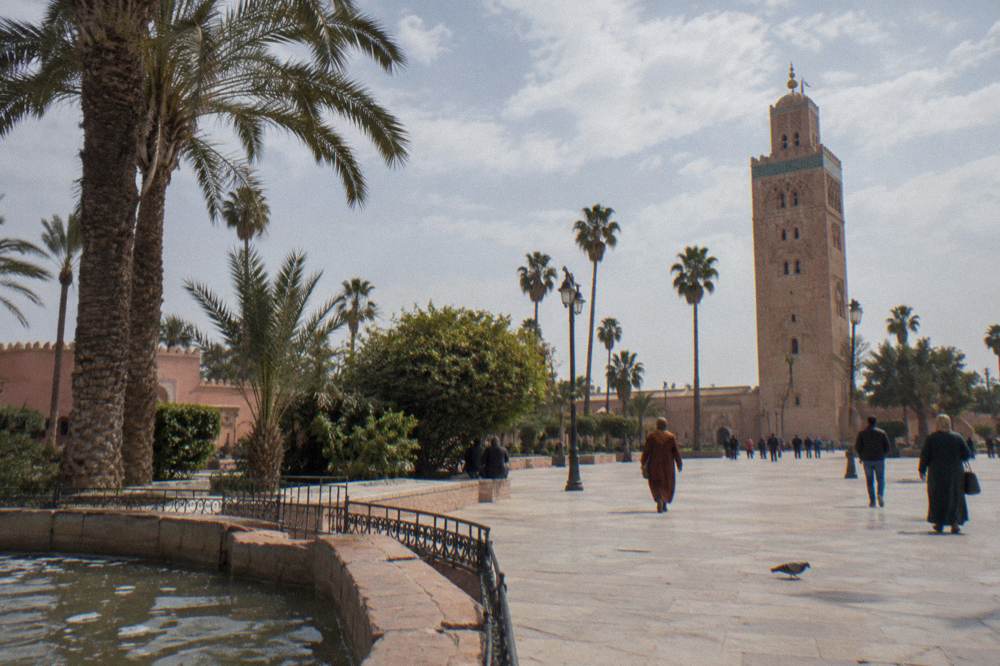
Free: the Mellah's streets and market lanes, Place des Ferblantiers, Bab Agnaou and the ramparts seen from the street, and, a little north, the Koutoubia's minaret esplanade and gardens. Paid: Bahia Palace at 100 MAD for a foreign adult, El Badi Palace at 100 MAD, the Saadian Tombs at 100 MAD, and the Almoravid Koubba at 100 MAD, each with 50 MAD for foreign children aged 7 to 13. Nothing in between: the district has no partial ticket and no pass that bundles these sites.
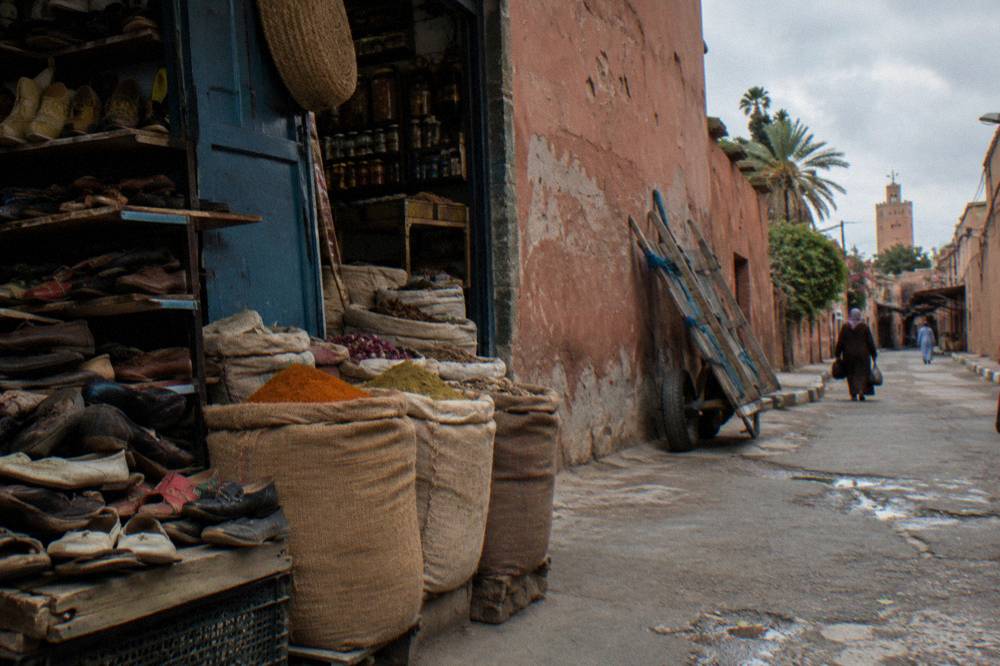
The free side needs little planning. The lanes, the square and the gate are open public space, walkable at any hour, and the market's energy is the point. Two conditions from the city's records travel with them: market prices are not fixed, so the pressure to buy rather than any entry fee is the real cost, and any building inside the quarter that charges admission is a separate fact from the streets around it. A synagogue and a cemetery linked to the quarter's Jewish history carry no published entry price, so no figure appears here for either. Treat any amount quoted to you at a doorway as a spoken price rather than a published one.
The paid side is where visitors lose money by assumption, and the Ministry of Culture's own e-services ticket site, live since 3 April 2025, sells one ticket per monument with no unified pass. The ministry's ticket platform is the place to check each monument directly, and it is the source behind the figures in the table below.
| Site | Status for visitors | Foreign adult | Foreign child 7 to 13 |
|---|---|---|---|
| Mellah streets and market | Free, open public space | 0 MAD | 0 MAD |
| Place des Ferblantiers | Free public square | 0 MAD | 0 MAD |
| Bab Agnaou and ramparts | Free from the street, possible scaffolding | 0 MAD | 0 MAD |
| Bahia Palace | Paid, borders the Mellah | 100 MAD | 50 MAD |
| El Badi Palace | Paid, short distance west | 100 MAD | 50 MAD |
| Saadian Tombs | Paid | 100 MAD | 50 MAD |
| Almoravid Koubba | Paid | 100 MAD | 50 MAD |
One trap deserves its own paragraph because it catches so many people. Bahia Palace, El Badi Palace, the Saadian Tombs and the Almoravid Koubba do let visitors in free on Fridays and on the first day of national and religious holidays, but that concession is for Moroccan nationals only. The 30 MAD rate you may see mentioned needs a Moroccan or resident document. Foreign visitors pay the full rate every day, so a blog post telling you to visit Bahia on a Friday "for free" is describing a rule that does not apply to you. The museums are a separate question again, and the guide to which Marrakech museums are free and which charge covers them, including Dar El Bacha at 60 MAD for foreign visitors, closed Mondays, on the national museums foundation's site.
If you want a guide's voice over the district rather than walking it alone, free options exist. The three walks below are all free to join, pay what you want, each led by an independent local guide and reserved on its own platform.
Of those, Jalil's Local Life Walk, rated 4.59 out of 5 across 301 GuruWalk reviews, meets at the foot of the Koutoubia minaret and runs 2 hours 30 minutes in English; the walk is free to join but its GuruWalk page flags possible extra costs such as entrance fees. Jamal's 4-Hour Extended City Walk, 4.63 out of 5 across 275 GuruWalk reviews, carries the same extra-cost flag. The Old City walk is listed on freetour.com, rated 9.6 out of 10 across 938 freetour.com reviews, and meets at Cafe Restaurant Le Samovar.

When Is The Best Time To Go?
There is no published opening hour for the Mellah itself, because the streets and Place des Ferblantiers are public space with no gate to close, so timing is about the paid monuments and the market rather than the district. The palaces around the quarter keep their own box-office hours, and the market lanes are working retail streets whose rhythm follows the trading day rather than any visitor schedule. Where opening times are unsettled, none are given, and no quiet-hour or crowd promises are offered, only what is known for sure.
What can be said with confidence is structural. The free parts of the quarter, its lanes, its square and the rampart gates, cost the same and stay walkable whenever you choose to go, which makes them the flexible half of any plan. The paid parts are the fixed half: ministry monuments sell a single ticket per site, online sales have run since 3 April 2025, and if a palace visit matters to you, that ticket buys your slot. Restoration works continue at Bahia Palace, El Badi Palace and the Saadian Tombs since their October 2023 reopening after the earthquake, so scaffolding or restricted sections can appear without warning and no completion date is published. The full index of guides sits on Free Things To Do In Marrakech.
Timing also interacts with the free-walk calendar, because every walking tour on this site has its own meeting point and slot, reserved in advance on GuruWalk or freetour.com. A walk that starts at the Koutoubia or Jemaa el-Fnaa can end within reach of the Mellah, which makes the quarter a natural free add-on before or after a booked slot rather than a destination you need to time independently. The best time for a Marrakech walking tour guide goes deeper on how slots and seasons interact.
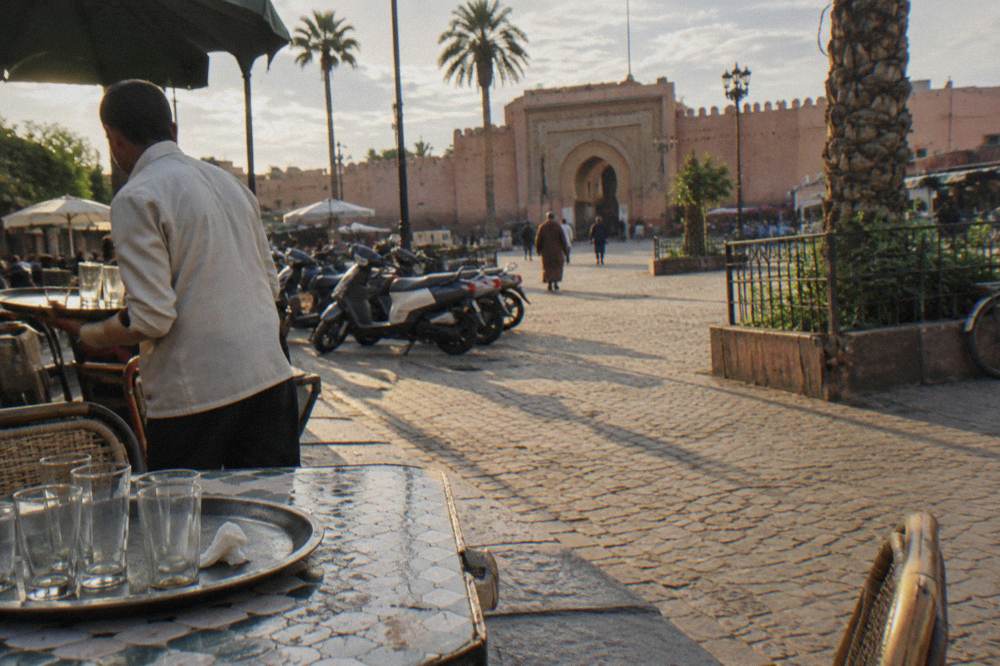
Finally, be skeptical of anyone who tells you the quarter or a monument is "closed today" and offers to guide you elsewhere. That line is one of the known scams around Marrakech's monuments and tanneries, and the Marrakech scams and fake guides guide lists the versions you are most likely to hear. The Mellah's streets do not close, and a ticketed monument's open or closed status is knowable at its own entrance or on the ministry's ticket platform, not from a stranger on the street.
Where Do Free Walking Tours Meet Nearby?
The Mellah has no walk that starts inside it, but every free walking tour in the city meets within the medina at points around the Koutoubia and Jemaa el-Fnaa, both a short walk from the quarter's lanes. Meetings are fixed per walk: for example the white dome on Koutoubia square, the white shrine near the Koutoubia, and Cafe Argana on Jemaa el-Fnaa. All 13 free walking tours in the city are free, pay what you want, and reserved on GuruWalk or, for some, freetour.com.
The Koutoubia cluster is the closest thing the Mellah has to a tour hub, and several English walks gather within sight of the minaret. Unveiling the Secrets of Marrakech, a free GuruWalk led by Mohamed amine, meets at the white dome on Koutoubia square, runs 2 hours 15 minutes in English, and is rated 4.91 out of 5 across 1,171 GuruWalk reviews, the strongest review pool of any walk that starts at this meeting point. Its GuruWalk page carries the reservation and the available times.
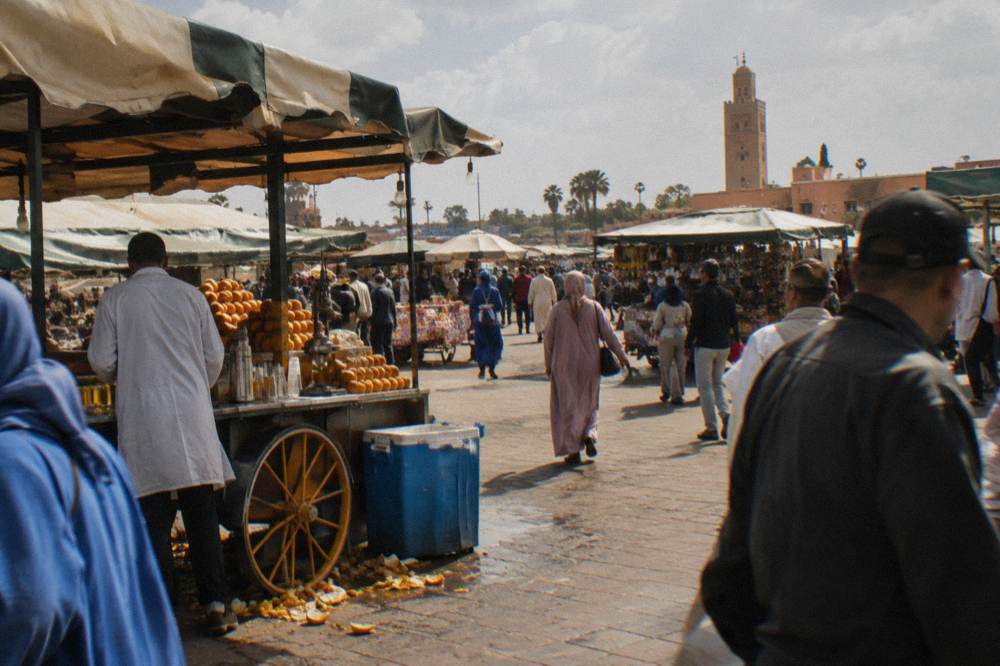
Mustapha's 2-Hour Medina Walk also meets at Koutoubia Mosque square, rated 4.9 out of 5 across 987 GuruWalk reviews, and like Jalil's walk its GuruWalk page flags possible extra costs such as entrance fees while the walk itself is free to join. For anyone pairing the Mellah with a longer medina loop, its 2-hour length leaves the rest of the day for the quarter, Place des Ferblantiers and Bab Agnaou.
The widest option from the same family is Youssef's English City Guide, which meets at the white shrine near the Koutoubia, runs 2 hours 30 minutes, and carries the largest review pool of any walk on this site: 4.78 out of 5 across 1,173 GuruWalk reviews. It carries no extra-cost flag. After any of these walks, the Mellah's free lanes sit south of the Koutoubia, reached by continuing past Bahia Palace's walls toward Place des Ferblantiers.
| Walk | Platform | Meets at | Duration | Figures |
|---|---|---|---|---|
| Unveiling the Secrets of Marrakech | GuruWalk | White dome, Koutoubia square | 2 hours 15 minutes | 4.91 out of 5, 1,171 reviews |
| Mustapha's 2-Hour Medina Walk | GuruWalk | Koutoubia Mosque square | 2 hours | 4.9 out of 5, 987 reviews |
| Youssef's English City Guide | GuruWalk | White shrine near the Koutoubia | 2 hours 30 minutes | 4.78 out of 5, 1,173 reviews |
| Medina Walk From Jemaa El-Fnaa | GuruWalk | Jemaa el-Fnaa main square | 2 hours 30 minutes | 4.85 out of 5, 235 reviews |
| English Old City, 2 Hours 45 | freetour.com | Cafe Restaurant Le Samovar | 2 hours 45 minutes | 9.6 out of 10, 938 reviews |
From Jemaa el-Fnaa the choice widens further, and the guide to free walking tours in Marrakech and how tip-based tours work explains the model every one of them runs on: free to join, pay what you want, reserved on the platform. If a group or a fixed professional guide appeals instead, the free versus paid walking tour comparison sets out the honest differences. Whichever you choose, the meeting point is the fixed fact: every walk on this site publishes one, and you should treat anything other than that published point, including a "better" meeting spot proposed on the street, as a warning sign.
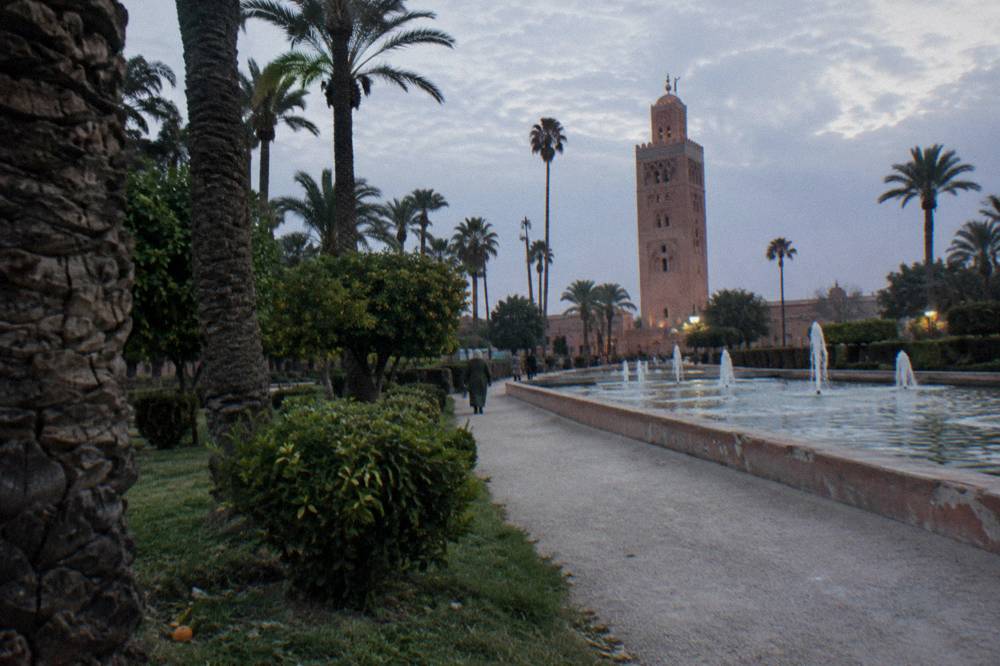
Mistakes That Trip People Up At The Mellah
The four mistakes that cost real money here are assuming the palaces are free on Fridays, treating a shop terrace as a free viewpoint, buying tickets from lookalike websites, and believing a street report that something is closed today. Each has a documented counter: Fridays are for Moroccan nationals, the tanneries carry a tip expectation, real tickets come from the ministry's own platform, and the Mellah's streets never close at all. Avoid these and the quarter costs exactly what you choose to spend in its market.
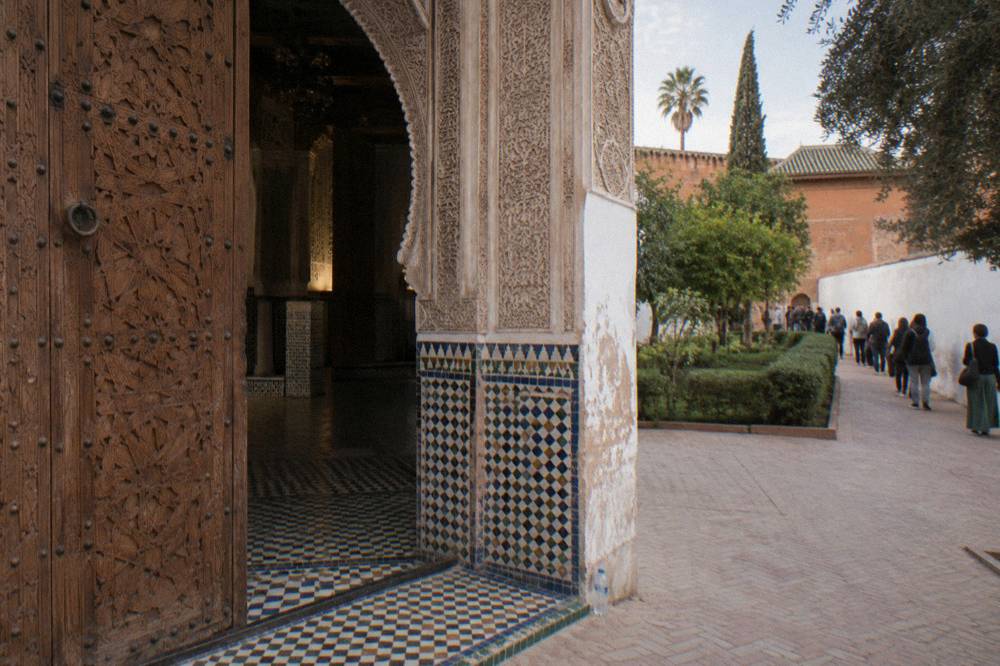
The Friday mistake is the most common. Visitors read that ministry monuments are free on Fridays and plan a free palace day, not realising the concession is restricted to Moroccan nationals, with the reduced 30 MAD rate needing a Moroccan or resident document. Foreign adults pay 100 MAD at Bahia, El Badi, the Saadian Tombs and the Almoravid Koubba on every day of the week. The second mistake is treating the tanneries near Bab Debbagh as a free sight: there is no tariff, but viewing the pits normally happens from a leather shop terrace where a tip or a purchase is expected, and the "it is closed today, I will guide you" line is the known scam of that area. Calling the tanneries simply free would be dishonest, so this guide does not.
The third mistake is ticket sources. Domains like bahiapalace.com and saadiantombs.com look official but are third-party resellers; real tickets come from the Ministry of Culture's e-services platform or at the monument. The fourth is believing closing-time claims made on the street, aimed at steering you toward a shop or an unofficial guide. The Mellah's lanes, the square and the gates are public and do not close, and a ticketed monument's status is on its own entrance or the ministry's platform. The what to avoid in Marrakech guide and the safety guide on walking the medina on a free tour cover the wider versions of these tricks, and Free Things To Do In Marrakech keeps the full free-and-paid split for every district in one place.
If you have read this far, three more free walks fit the same visit, each reserved on its own page.
Common Questions
Is The Mellah In Marrakech Free To Visit?
Yes, the quarter itself is free. The Mellah's streets and market lanes are public space with no ticket, no gate and no published hours, and Place des Ferblantiers beside it is a free public square. Only buildings inside and around the quarter charge, mainly Bahia Palace and El Badi Palace at 100 MAD each for a foreign adult.
Can You See The Jewish Quarter Without A Guide?
Yes. The lanes and the market are ordinary public streets, and nothing requires a guide or a ticket to walk them. A guide adds context rather than access, and the free walking tours on this site, reserved on GuruWalk or freetour.com, cover the wider medina around the quarter with meetings at the Koutoubia and Jemaa el-Fnaa.
Is Bahia Palace Free On Fridays?
No, not for foreign visitors. The free Fridays and national-holiday entry at Bahia Palace, El Badi Palace, the Saadian Tombs and the Almoravid Koubba applies to Moroccan nationals only, and the 30 MAD rate needs a Moroccan or resident document. Foreign adults pay 100 MAD every day.
Where Do Free Walking Tours Near The Mellah Meet?
At fixed points around the Koutoubia and Jemaa el-Fnaa. Unveiling the Secrets of Marrakech meets at the white dome on Koutoubia square, Mustapha's walk at Koutoubia Mosque square, and the Old City walk on freetour.com at Cafe Restaurant Le Samovar. Each walk publishes its own meeting point on its platform page.
Are The Tanneries Near The Mellah Free?
Not honestly described as free. The tanneries near Bab Debbagh have no entry tariff, but the usual way to view the pits is from a leather shop terrace where a tip or a purchase is expected, and reports of the tanneries being closed are a known scam line. Treat the visit as conditional, not free.
What Is Closest Free Thing To See Beside The Mellah?
Place des Ferblantiers on the quarter's edge and Bab Agnaou in the ramparts to the south, both free public space with no ticket. Sections of the ramparts may carry scaffolding while restoration continues. The Koutoubia's minaret esplanade and gardens, also free to view and walk, sit a short distance north.